


The Bank of America Corporation published a report where it highlighted its optimism for the growth of the Dominican economy by indicating that it has grown faster than expected, despite the oil crisis.
It revised upwards its GDP growth forecast for 2022 to 5.5% (from 4.8%) and for 2023 they expect a 4.2% expansion.
Bank of America is an American multinational banking and financial services company that conducts periodic country assessments and is among the third largest companies in the world.
BOA traveled to Santo Domingo to meet with government officials, after which they felt even more optimistic about the Dominican Republic’s economic prospects.

GDP is growing much faster than we expected, despite the oil crisis. The government is likely to exceed the 2022 budget, both the amended proposal and the original given the large cash reserves.
GDP growth:
Significantly higher than expected. We are revising upwards our GDP growth forecast for 2022, to 5.5% (from 4.8%), due to the big positive surprise of the second quarter (10.5% quarter-on-quarter) and the strong incoming data. For 2023, we expect continued expansion, assuming negative spillovers from a weaker U.S. economy and higher domestic interest rates.
Tourism:
Tourism has been the star sector in 2022, accounting for a third of the GDP growth seen in the first half of the year. It has already recovered to pre-pandemic levels. Dominican officials expect an impressive growth of 8.4 million non-resident tourists by 2022 (between flights and cruise ships), up from 5.3 million in 2021.

Pre-clearance agreement with the US: upside risk for 2023. Passengers flying into the U.S. from the Dominican Republic would be treated as domestic arrivals, bypassing CBP and TSA checks.
The public debt ratio is likely to fall substantially in 2022. We expect the Gross Debt Ratio of the Non-Financial Public Sector to fall to 46.4% of GDP by the end of 2022, from 50.4% in 2021. The latest reading (July) is US$52 billion (~47.7% of GDP).
The government will not issue any more Eurobonds in 2022. The budget amendment, submitted to Congress in August, states that the government does not need additional funding from international markets.
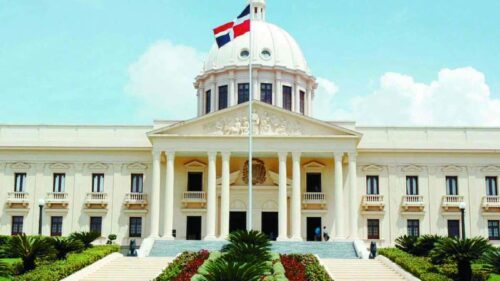
The Treasury has a very strong liquidity position. The government has many cash deposits, due to overfunding in 2020 and 2021 when the fiscal deficit ended up being much lower than budgeted amounts. That’s nearly $5 billion in liquidity, this creates a good cash cushion.
Dominican Peso:
The exchange rate should depreciate somewhat in the second half of 2022. The Dominican peso is trading at 53 pesos per dollar, 7% stronger so far this year, which for us is disconcerting due to the widening current account deficit. As for the exchange rate, we expect the Dominican peso to weaken to 55 by December.
On the Political Front:
Low risk of social protests. President Luis Abinader continues to have one of the highest approval ratings in the Latin American region. The latest reading published in August by RCC Media is 68.8%.

Presidential elections: an early look at potential candidates. Locals believe Luis Abinader will seek presidential re-election in 2024. The Constitution allows it and there is a long tradition of re-election in the country.
The red political tide is unlikely to reach the shores of the Dominican Republic. Beyond this, we note that all potential major presidential candidates are seen as market-friendly.
Therefore, the Dominican Republic’s asset prices should not suffer from the volatility usually associated with elections in Latin America, where there is almost always a competitive (left-wing) populist candidate who baffles investors.