

Before there was a golden lasso, there was a Mexican grandmother, a determined mother and a young woman with $25 in the bank. HER Name was Lynda Carter: The Latina Behind Wonder Woman
That was Lynda Carter’s reality when Hollywood finally decided it was ready for her.
The Phoenix, Arizona, native was broke, tired of auditioning and seriously considering packing up her belongings and heading home.
Then came the phone call.
A television series based on a DC Comics character named Diana Prince was looking for its leading lady.
Carter got the part.
And just like that, the woman with $25 became Wonder Woman.
But there is a part of Carter’s story that deserves more attention.
She was also the granddaughter of Mexican immigrants from Chihuahua.
And unlike some Hollywood stars who discovered their Latino heritage after becoming famous, Carter never had to discover hers.
She grew up with it.
Before Hollywood, There Was Grandma’s Kitchen
Lynda Jean Carter was born July 24, 1951, in Phoenix.
Her mother, Juana Córdova, came from a Mexican family with roots in Chihuahua, Mexico. Her father, Colby Carter, had English and Irish ancestry.
So Carter grew up with a little bit of both worlds.
But her Mexican side was not some footnote buried in the family tree.
It was right there in the kitchen.
Masa.
Beans.
Family recipes.
The sounds, smells and traditions that become so ordinary when you’re growing up that you don’t realize how valuable they are until you’re older.
Carter has spoken about the importance of those childhood memories, particularly the time she spent around her grandmother.
Her mother also made sure her daughter understood her Mexican heritage and carried it proudly.
That lesson would follow Carter all the way to Hollywood.
And Hollywood, as it turned out, was going to need a little more of that Mexican pride.
The Girl Who Couldn’t Sit Still
Carter started performing when she was just five years old, appearing on a local television talent show.
By high school, she was performing with a band.
At Arizona State University, she was voted Most Talented.
Apparently, sitting quietly in a classroom was never really the plan.
She left college and joined a rock group called the Garfin Gathering, hitting the road and performing in casinos, hotels and lounges.
This was not exactly the glamorous version of show business.
One of the band’s first performances was at a newly opened San Francisco hotel that did not even have a completed sidewalk entrance.
Their audience?
Hotel workers, guests and people wandering up from the parking garage.
Show business, baby.
Carter kept going.
For two years, she traveled and performed.
Eventually, however, the road caught up with her.
She returned to Phoenix around age 20, exhausted and unsure what was next.
Then a friend suggested a beauty contest.
Carter entered.
She won.
And suddenly, things started moving.
Miss Arizona, Miss World, Hollywood
The local victory led to Miss Arizona.
That led to Miss World USA 1972.
Then came the international stage, where Carter finished among the top 15 at Miss World.
The beauty pageant world had opened a door.
Carter walked through it and headed for Los Angeles.
She began taking acting classes and spent roughly three years auditioning.
Three years of rejection.
Three years of waiting.
Three years of trying to convince Hollywood that she belonged there.
Meanwhile, the money was disappearing.
Slowly at first.
Then not so slowly.
By the time an opportunity connected to a new television series came along, Carter was down to $25 in her bank account.
Think about that for a second.
Twenty-five bucks.
Today, that might buy you lunch.
Back then, it represented just how close she was to giving up.
She was considering returning to Arizona.
Then came the audition for Wonder Woman.
Enter Wonder Woman
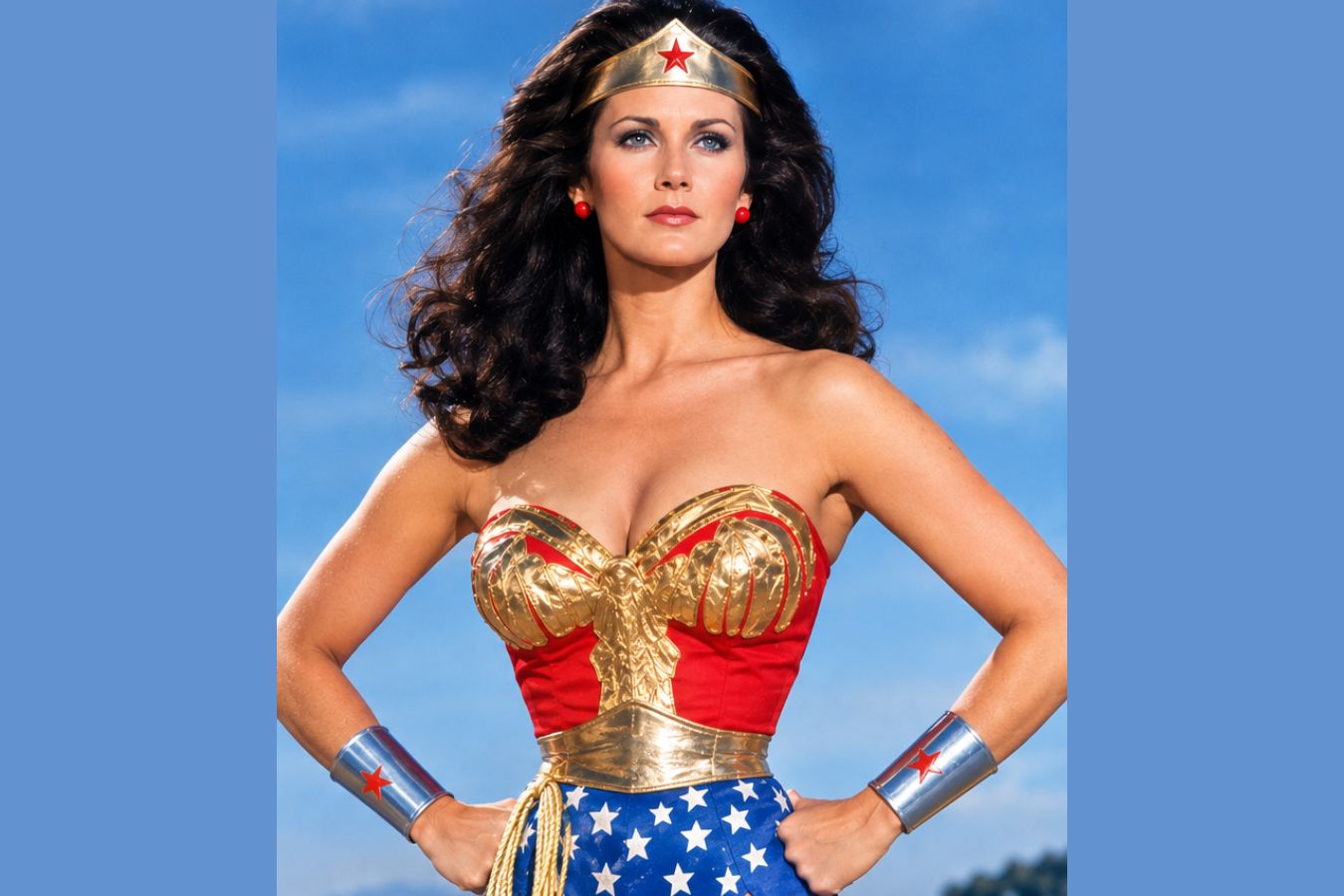
In 1975, Lynda Carter stepped onto television screens as Diana Prince.
Then she became Wonder Woman.
And America went a little crazy for her.
Carter’s version of Wonder Woman was powerful, confident and graceful.
She could fight.
She could command a room.
She could save the day.
And she could do it while looking completely comfortable in that iconic costume.
For generations of television viewers, Carter wasn’t simply playing Wonder Woman.
She was Wonder Woman.
But there was another reason her presence mattered.
Carter was a woman of Mexican heritage appearing at the center of an enormously popular American television series at a time when Latinas were rarely given that kind of visibility.
The show did not make her ethnicity the storyline.
There was no weekly lesson about being Mexican American.
She simply showed up.
Week after week.
Episode after episode.
And for Latino girls watching at home, that could say more than a television speech ever could.
Here was a woman with Mexican roots occupying the center of the screen.
She wasn’t the sidekick.
She wasn’t the maid.
She wasn’t the background character.
She was the hero.
She Didn’t Hide the Mexican Part
Carter’s fame could have easily caused her to distance herself from her background.
Instead, she went the other way.
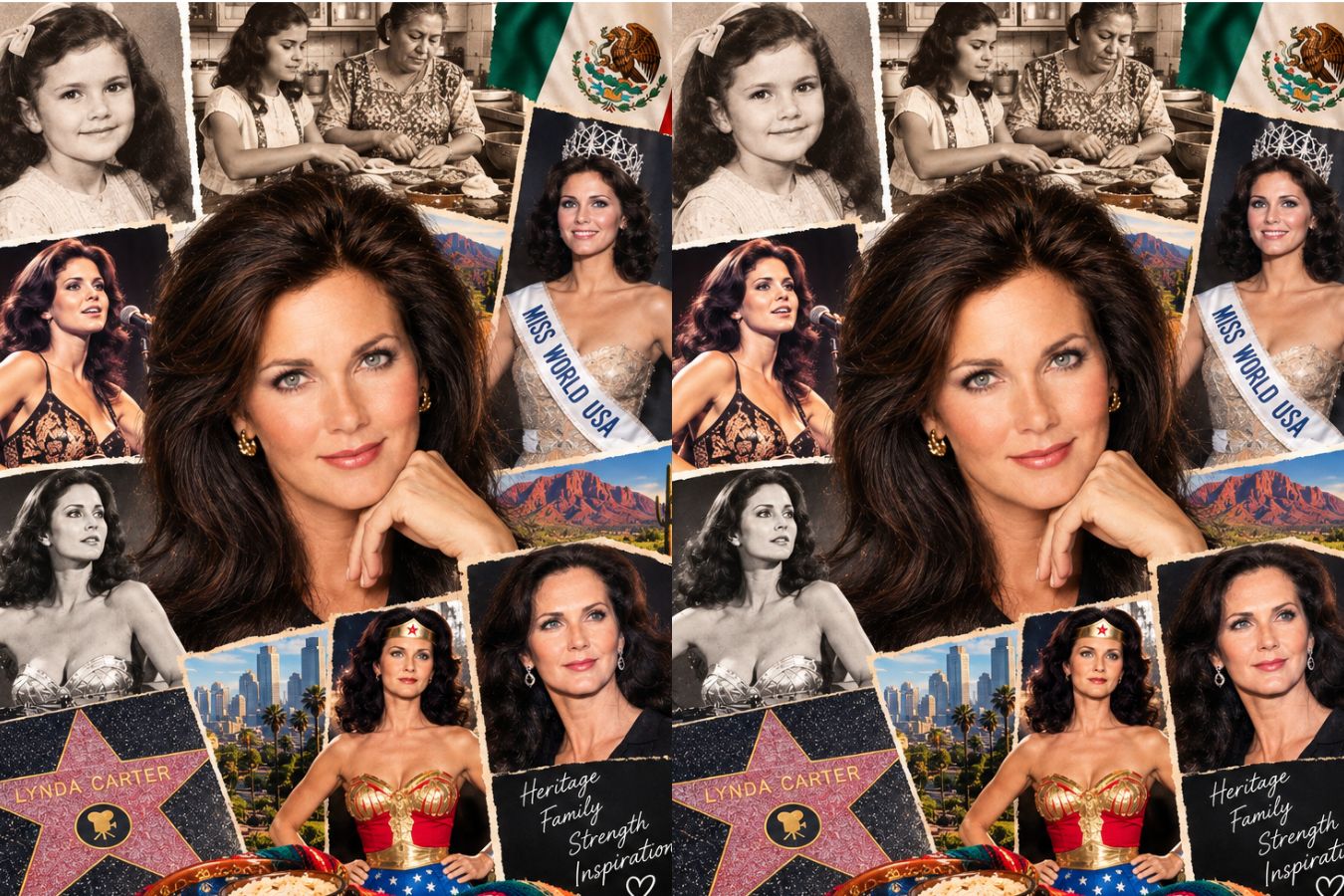
She openly acknowledged her Mexican heritage and continued to talk about her family roots.
In 1983, she received the Hispanic Woman of the Year award.
She also spoke out against Arizona’s anti-immigration laws and participated in television programming celebrating her Mexican heritage.
Her connection to her roots wasn’t something she pulled out whenever the cameras arrived.
It was part of her identity.
And that matters because Hollywood has a long history of asking people to become more “American” by becoming less of themselves.
Carter didn’t seem interested in that deal.
She had a different message:
You can become an American icon without leaving your heritage at the door.
Wonder Woman Was Only Chapter One
Wonder Woman ended in 1979 after four seasons.
Carter, however, kept working.
She recorded music, appeared in television programs, took film and television roles and became involved in advocacy and charitable causes.
She also raised two children.
Her personal life brought both joy and heartbreak.
Her second husband, attorney and businessman Robert Altman, died in 2021 following a long illness.
Carter continued moving forward.
Then Hollywood came knocking again.
This time, it wanted the original Wonder Woman back.
The Golden Lasso Comes Full Circle
In 2020, Carter appeared in Wonder Woman 1984 as Asteria, an ancient Amazon warrior.
Her appearance was relatively brief.
But for fans who had grown up watching her in the 1970s, it was anything but insignificant.
There she was.
The original Wonder Woman.
Older.
Still commanding the screen.
Still connected to the character that had changed her life.
It was Hollywood’s version of passing the torch.
But there was something else happening beneath the superhero spectacle.
A woman who had once been a young performer with $25 in her bank account had returned to the franchise that made her an icon.
That’s quite a journey from a Phoenix hotel lounge.
The Woman Behind the Superhero
It is tempting to reduce Lynda Carter’s story to a simple Hollywood fairy tale.
Poor actress gets big break.
Becomes famous.
Roll credits.
But that misses the interesting part.
Before Carter became Wonder Woman, she was already carrying decades of family history with her.
She was the daughter of Juana Córdova.
She was the granddaughter of a Mexican family from Chihuahua.
She was the little girl who grew up around her grandmother’s kitchen.
She was the college student who left school to chase music.
She was the performer playing hotel rooms before anyone knew her name.
She was the beauty queen who opened another door.
She was the struggling actress who nearly went home.
And then she became Wonder Woman.

From $25 to Hollywood History
Carter’s story is ultimately bigger than the famous $25.
The money tells us how close she was to giving up.
Her heritage tells us what she refused to give up.
She never had to choose between becoming an American icon and acknowledging where her family came from.
She did both.
And that may be one of the most interesting things about Lynda Carter’s legacy.
She didn’t need a superhero costume to make her Mexican heritage visible.
She carried it with her long before Hollywood handed her the golden lasso.
So yes, she had $25 in the bank when Wonder Woman came calling.
But she also had something Hollywood couldn’t give her.
A family.
A culture.
A history.
And a mother who taught her that none of it was something to hide.
The golden lasso made Lynda Carter famous.
Her roots helped make her who she was.