

The Latino Heart Behind the Pacemaker
Some people leave a mark on the world. Jorge Reynolds left a heartbeat. Literally. This Colombian engineer didn’t just build gadgets; he built life. Before him, a faulty heart was pretty much a death sentence. After him, millions could keep living, dancing, and falling in love, thanks to a tiny machine pulsing quietly inside their chests.

Born in Bogotá, Colombia, in 1936, Reynolds wasn’t your average kid tinkering with toys. He was the kid who wanted to know why things ticked, or in this case, why hearts didn’t. By the 1950s, medicine knew how to treat some heart conditions, but when the heart’s natural rhythm went haywire, there was no reliable fix. That’s where Reynolds came in, armed with curiosity, a bit of madness, and a very Colombian mix of resilience and ingenuity.
In 1958, while most of the world was figuring out rock ‘n’ roll and space travel, Reynolds built the first external pacemaker powered by, wait for it, a 45-kilogram machine. Yeah, this was not the sleek little device we know today. His prototype was bulky, plugged into the wall, and looked like something out of a sci-fi movie. But it worked. And when it did, the first patient in Colombia to receive it got a second chance at life.
This breakthrough didn’t just save one man, it sparked a revolution in biomedical engineering. Reynolds’s invention became the foundation for what we now know as the modern pacemaker: small, portable, and often implanted directly into the body. He basically set the rhythm for future innovation.
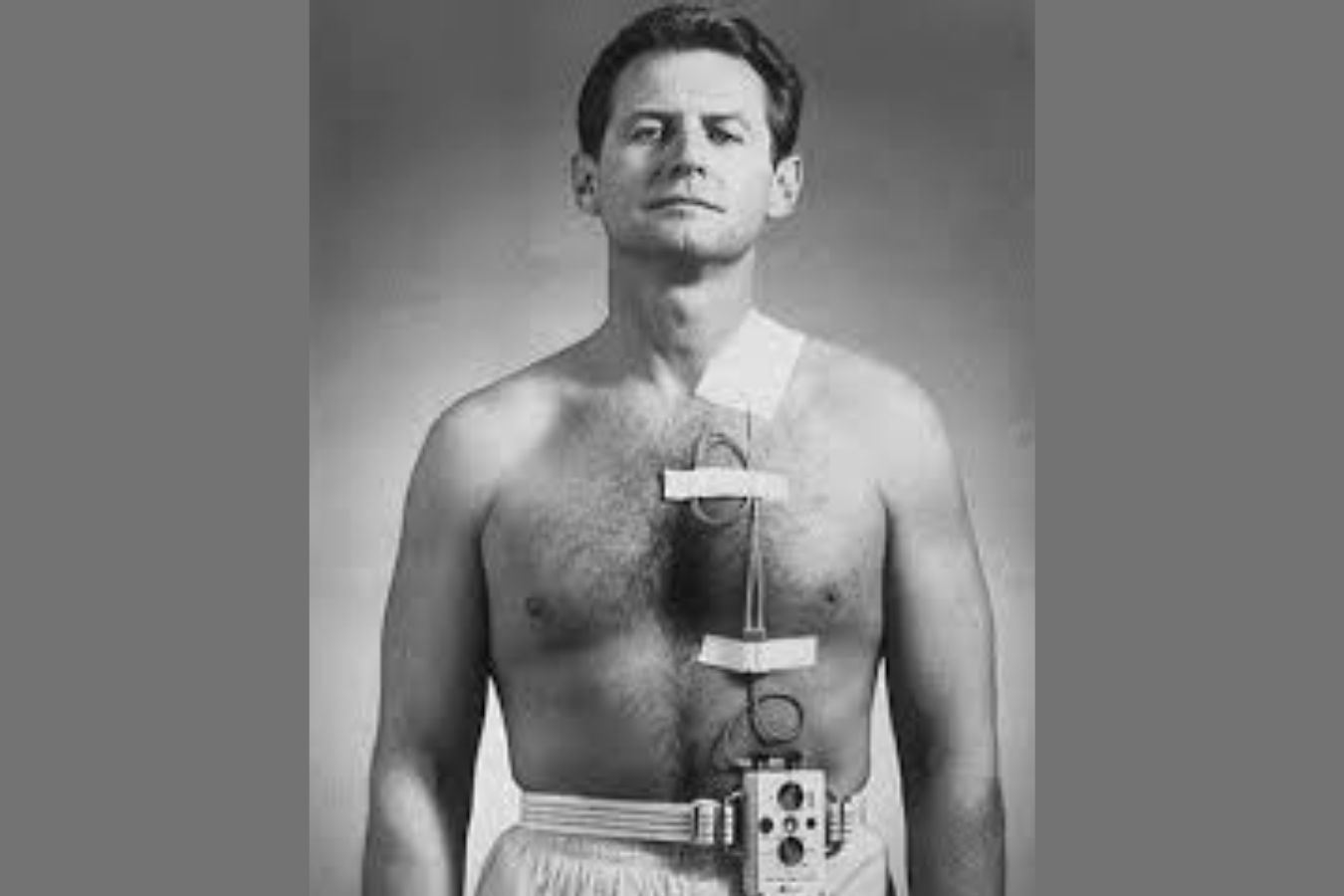
But here’s what makes his story even more interesting: Reynolds wasn’t doing this in some fancy U.S. lab with unlimited funding. Nah. He was doing it in Colombia, with limited resources, passion, and a belief that he could innovate just as fiercely as anyone else. Decades later, he’s still active in research, developing micro-pacemakers and exploring how whale heartbeats can inspire better medical technology. (Yes, whales. Because when Jorge Reynolds dreams, he dreams big.)
He’s also a symbol of how science isn’t just a Western story, it’s a global one. Reynolds proves that brilliance can come from anywhere, even from a country better known for coffee, fútbol, and cumbia than for cardiac engineering.
If you ever find yourself in Bogotá, you might run into Reynolds, distinguished, silver-haired, and still talking passionately about the human heart like it’s a love story that never ends. And in a way, it is. His life’s work reminds us that the heart isn’t just a pump, it’s potential.
So the next time you hear that familiar beep… beep… beep in a hospital room, remember that behind that sound is a Latino engineer who refused to accept that life had to stop beating. Jorge Reynolds didn’t just make a machine, he made hope possible, one heartbeat at a time.
Nataly Galan & Her Journey from Reggaeton to a Ph.D. Chemist
Quick Facts About Jorge Reynolds
Full Name: Jorge Reynolds Pombo
Born: June 22, 1936, in Bogotá, Colombia
Education: Studied Electronic Engineering at Trinity College, Cambridge University (UK)
Known For: Inventing the first external pacemaker in 1958
Notable Achievements:
- Designed the world’s first pacemaker used successfully in a human patient in Latin America
- Developed micro-pacemakers that don’t require batteries
- Conducted groundbreaking research on whale heartbeats to better understand human cardiac function
- Recognized internationally as a pioneer in biomedical engineering

Legacy:
Jorge Reynolds transformed how we think about the human heart, turning electrical impulses into instruments of survival. His work has saved millions of lives and continues to inspire engineers, doctors, and young Latinos who dream big.
Fun Fact:
Even in his 80s, Reynolds remains active in scientific research, proving that passion, just like the heart, never stops beating.