


Peruvian Engineer Creates Device That Generates Electricity from Plants
A groundbreaking invention by Peruvian engineer Hernán Asto is turning plants into a natural source of electricity. Through his patented device, a single potted plant can generate enough energy to power a lightbulb.

Asto leads a startup that developed a technology capable of harnessing electricity from plant photosynthesis. As plants undergo this natural process, they release electrons, which can be captured and stored as usable energy.
His innovative project recently earned the prestigious Bio-Circular Green award in the Micro, Small, and Medium Enterprises (MIPYME) category from the Asia-Pacific Economic Cooperation (APEC). This recognition highlights its contribution to sustainability by producing clean, natural electricity.
How Alinti Works
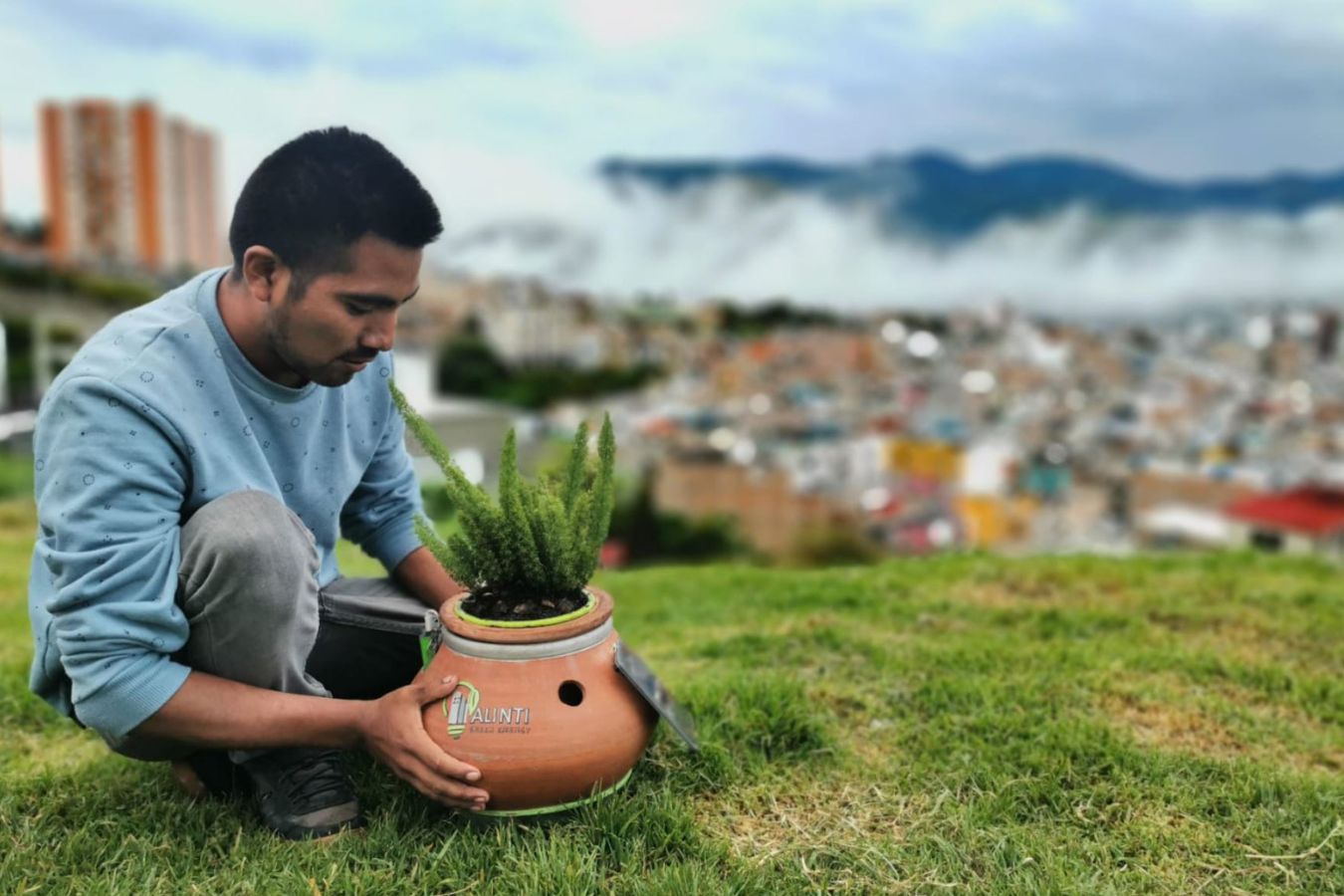
Asto’s invention, called Alinti, is a device that generates electricity by capturing electrons released by plant roots during photosynthesis. These electrons are collected through a microcell and stored in an integrated battery system. The entire setup—including a planter, microcells, plants, and a battery—weighs just four kilograms, making it lightweight and practical for home use.
Beyond electricity generation, Alinti also improves indoor air quality by absorbing harmful toxins like benzene and ammonia. This dual-purpose benefit makes it an excellent eco-friendly addition to any household.
Read: 4 Latino Inventors that Influenced the Course of Technology
A Simple and Sustainable Solution
The 31-year-old inventor, a native Quechua speaker, has already won multiple international awards for his work. He explains that Alinti is compatible with all plants capable of photosynthesis, though three species—candle fern, spider plant, and cyclamen—are particularly efficient in generating electricity.
The maintenance required is minimal. The plants need just a small amount of water every five days, and the system has a projected lifespan of 10 years. Asto’s innovation has already provided electricity to many rural families and is now being tested for public lighting applications.
From a School Project to Global Recognition
Asto credits his university education for helping him develop this groundbreaking technology. He recalled his early experiments in high school, where he first explored the idea of generating electricity from plants, and continued refining the concept through higher education.
The name “Alinti” combines words from both Aymara and Quechua languages, reflecting its deep cultural roots and innovative approach. The device relies on a combination of microorganisms, plants, and soil, enhanced by nanotechnology, to produce a steady biological current. The 10-amp battery can charge mobile devices or provide up to five hours of illumination, making it a practical solution for energy needs in remote areas.