

Claudia Sheinbaum, set to be Mexico’s first female president, made history as the country’s projected election winner. The climate scientist and former mayor of Mexico City confirmed her victory Sunday night, sharing that her two opponents had conceded.
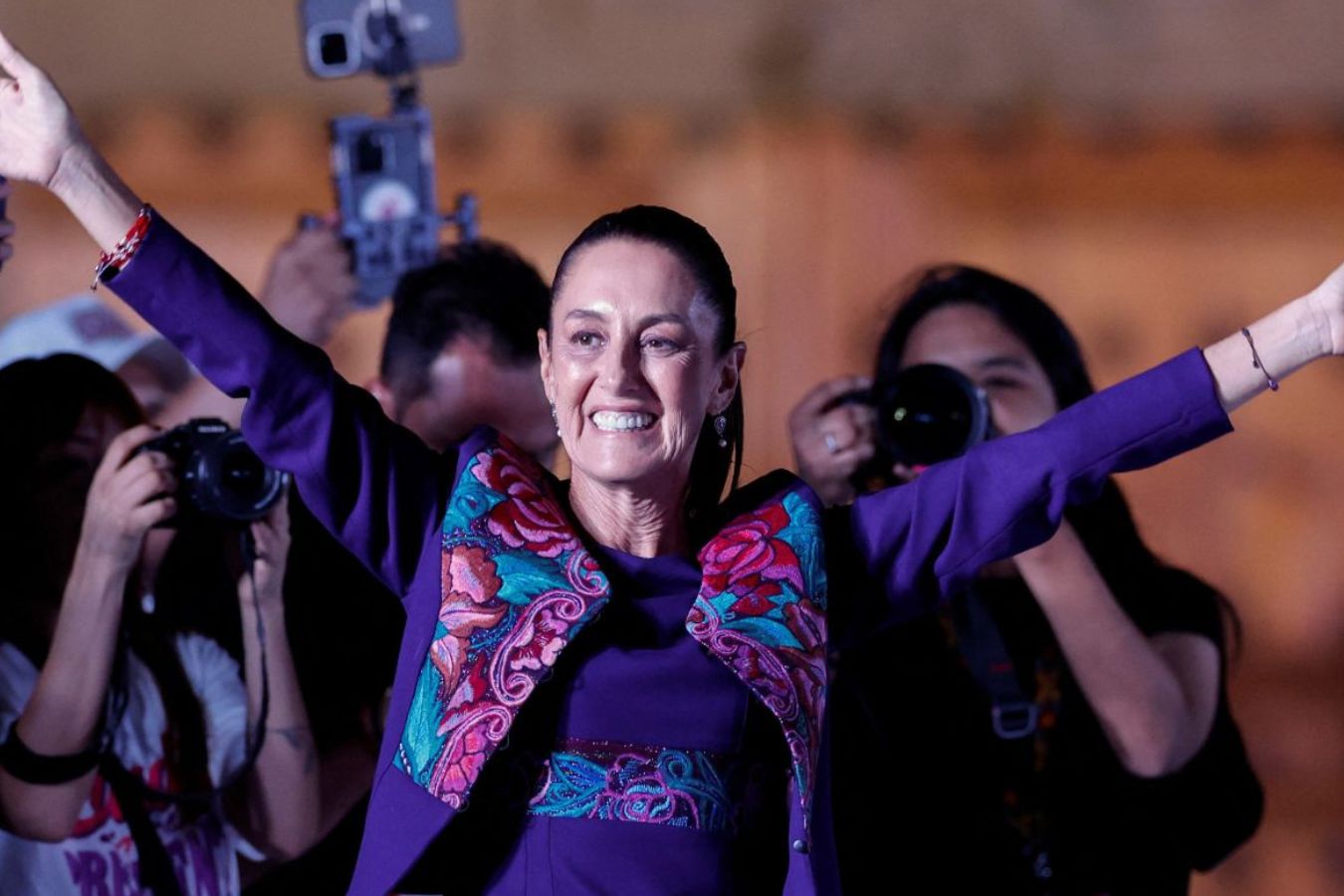
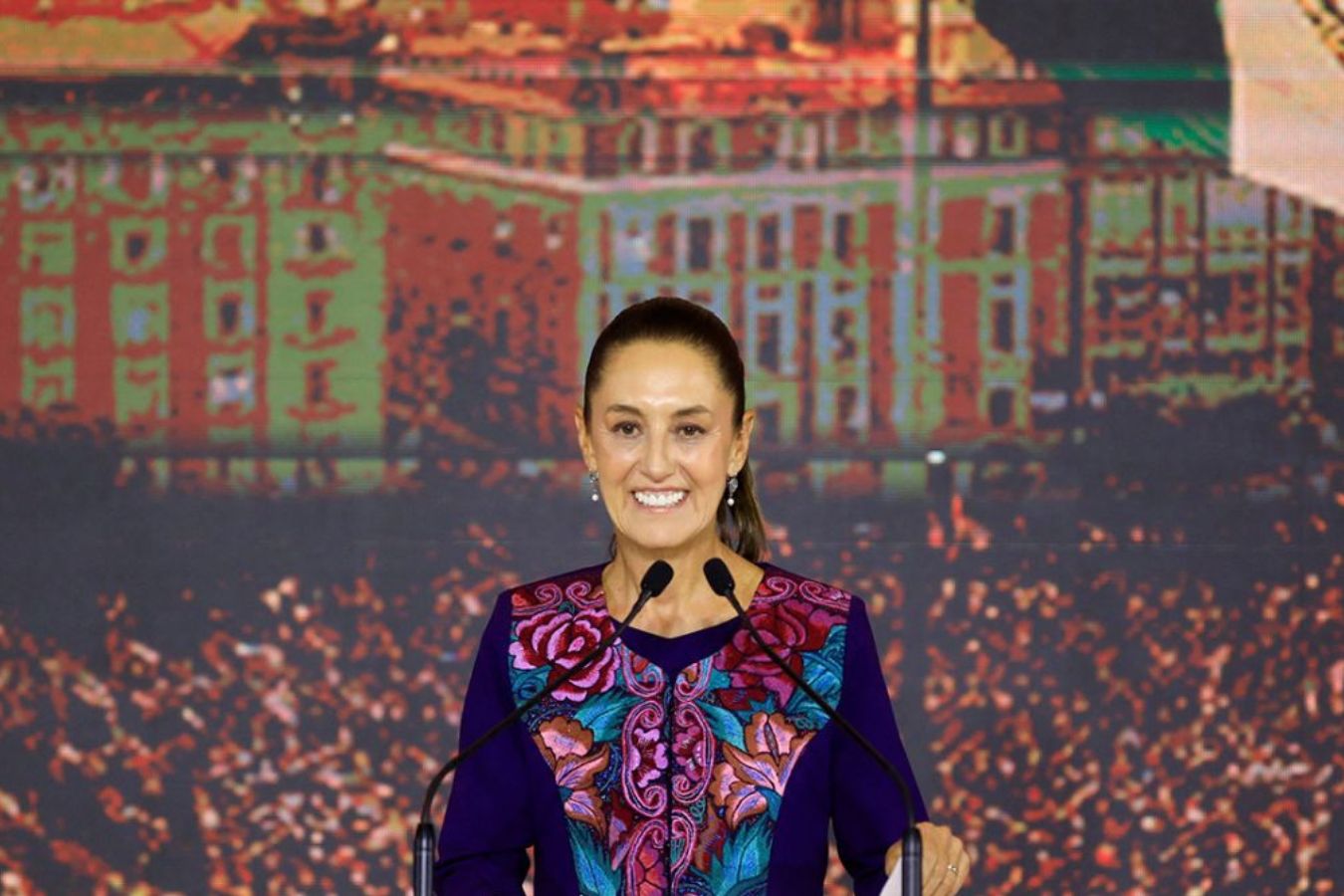
“I will become the first woman president of Mexico,” Sheinbaum announced with a smile from a downtown hotel. The electoral authorities’ statistical sample showed an irreversible lead in her favor. She expressed gratitude to the women who have paved the way, saying, “We’ve all made it, with our heroines who gave us our homeland, with our mothers, our daughters, and our granddaughters.”
Sheinbaum, the candidate from the ruling MORENA party, celebrated her win in Mexico City. According to the National Electoral Institute, she secured between 58.3% and 60.7% of the vote. Opposition candidate Xóchitl Gálvez garnered between 26.6% and 28.6%, while Jorge Álvarez Máynez received between 9.9% and 10.8%.
After 42% of the polling place tallies were counted, Sheinbaum held a 27-point lead over Gálvez. Her campaign focused on continuing the policies of her political mentor, President Andrés Manuel López Obrador, who congratulated her on the victory, acknowledging her historic win.

López Obrador, who won the presidency in 2018 with 53.2% of the vote, saw Sheinbaum as his successor. Despite a strong challenge from Gálvez, Sheinbaum maintained a solid lead throughout the campaign, marking the first time Mexico’s main presidential contenders were both women.
Following her victory, Gálvez took to social media to express concerns about the vote count, but Sheinbaum’s supporters celebrated in the Zócalo, Mexico City’s main plaza. The turnout, however, was more subdued compared to López Obrador’s 2018 win.
Sheinbaum, noted for her calm demeanor during crises, is the granddaughter of Bulgarian and Lithuanian Jewish migrants. Unlike López Obrador, she is considered more mainstream and less ideological by analysts like USC’s Pamela Starr.
The election also highlighted voters’ concerns over security and economic issues. Many, like Fernando Fernández, hoped Sheinbaum would address issues that López Obrador couldn’t, such as crime and the economy. Itxel Robledo, another voter, emphasized the need for professional governance.
Opposition candidate Gálvez, a tech entrepreneur, campaigned on a tougher stance against organized crime, criticizing López Obrador’s “hugs not bullets” policy. With nearly 100 million registered voters, the election also involved choosing governors, congressional representatives, mayors, and other local officials amid a backdrop of violence and economic challenges.
This election served as a referendum on López Obrador’s presidency, marked by expanded social programs but limited success in reducing cartel violence. Sheinbaum has pledged to continue his policies, including a universal pension for the elderly and youth apprenticeships.
Despite the concerns and challenges, Sheinbaum’s historic win marks a significant milestone for Mexico, promising continuity and the hope of addressing ongoing issues more effectively.
 https://shoplatintrends.etsy.com