


Firelei Báez: Reimagining History, Identity, and Caribbean Consciousness
When Firelei Báez’s work sold for over $1.11 million at a Christie’s auction in New York in 2025, she made history, not only for herself, but for the entire Dominican art community. This remarkable achievement marked the highest price ever paid for a work by a Dominican artist, and it has sparked fresh conversations about representation, value, and artistic legacy in global art markets.
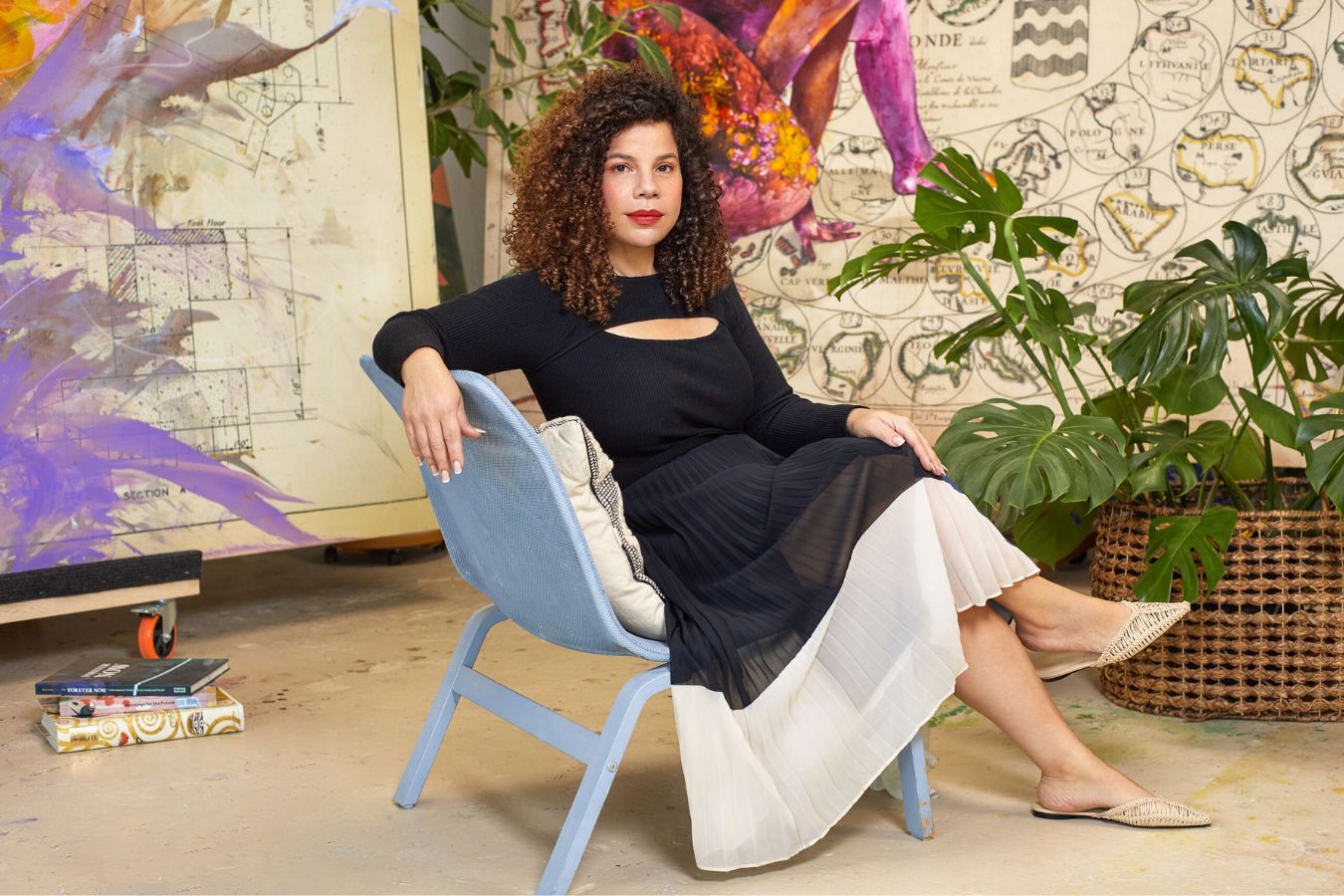
Roots in Hispaniola: A Childhood Between Two Worlds
Born in 1981 in Santiago de los Caballeros in the Dominican Republic, Firelei Báez grew up at the cultural crossroads of the Caribbean. Her mother is Dominican and her father of Haitian descent, and much of her early life unfolded in Dajabón, a vibrant market town on the border with Haiti. This unique upbringing, steeped in the fraught history and rich traditions of both nations, planted the seeds for the themes that would later dominate her artistic practice.
At the age of eight, Báez and her family relocated to Miami, Florida, immersing her in yet another cultural context. Moving between countries and identities, she learned early on how place and heritage could shape personal and collective narratives, a lesson that would become central to her art.
Training the Eye: Education and Early Influences
Báez’s artistic journey took her to some of the United States’ most respected fine arts institutions. After high school in Miami, she moved to New York to attend The Cooper Union School of Art, where she earned her Bachelor of Fine Arts.
She continued her studies at Hunter College, completing her Master of Fine Arts in 2010. Báez also enriched her craft at the Skowhegan School of Painting and Sculpture, a prestigious intensive program for emerging artists.
This rigorous training, grounded in both technical skill and conceptual inquiry, provided Báez with the tools to explore complex ideas about identity, history, and culture, and to do so with astonishing visual innovation.
Living and Working in New York
Today, Báez is based in New York City, a global hub for contemporary art. From her studio in the city, she crafts works that weave together portraiture, landscape, mythological references, archival materials, and cartography into layered, expansive compositions.
Frida Kahlo’s Legacy Soars with Record Portrait Sale of $55M
Her choice to remain in New York, a place of both artistic opportunity and multicultural exchange, has allowed her work to resonate on an international stage, while remaining deeply rooted in Caribbean experience.
A Vision Forged from Memory, Myth, and History
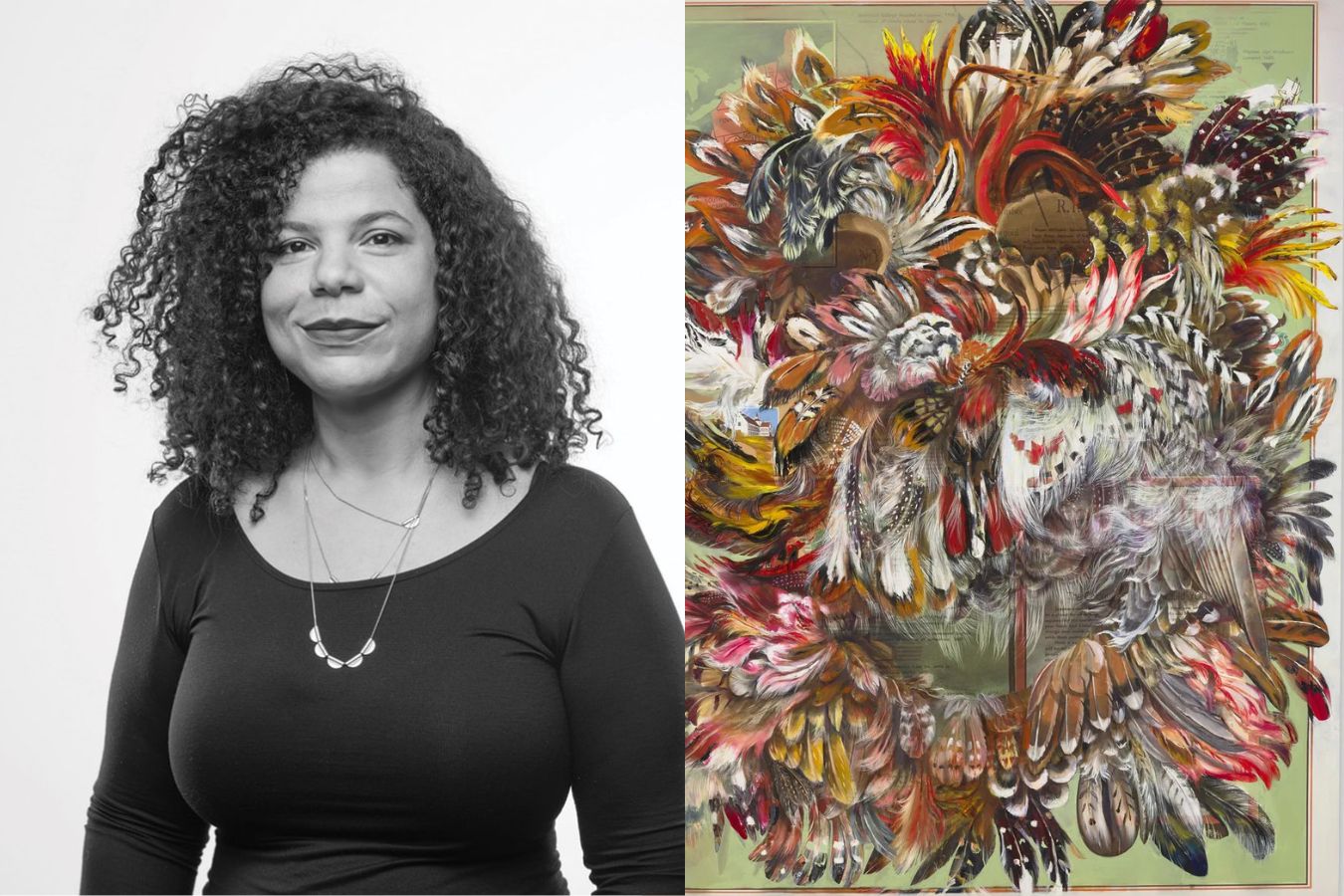
What sets Firelei Báez apart is her ability to blend personal history with larger cultural narratives. Her work often reimagines historical maps, archival documents, and visual records, transforming them into vibrant, rhythmic compositions that question colonial legacies and celebrate Afro-Caribbean identity.
In many pieces, she incorporates mythology and folklore, such as the ciguapa, a legendary figure from Dominican folklore, alongside patterns and symbols drawn from African diasporic spiritual systems. These elements are not mere decoration; they are intentional tools for reclaiming narratives that have been marginalized or overlooked by dominant histories.
Breaking Records and Redefining Value
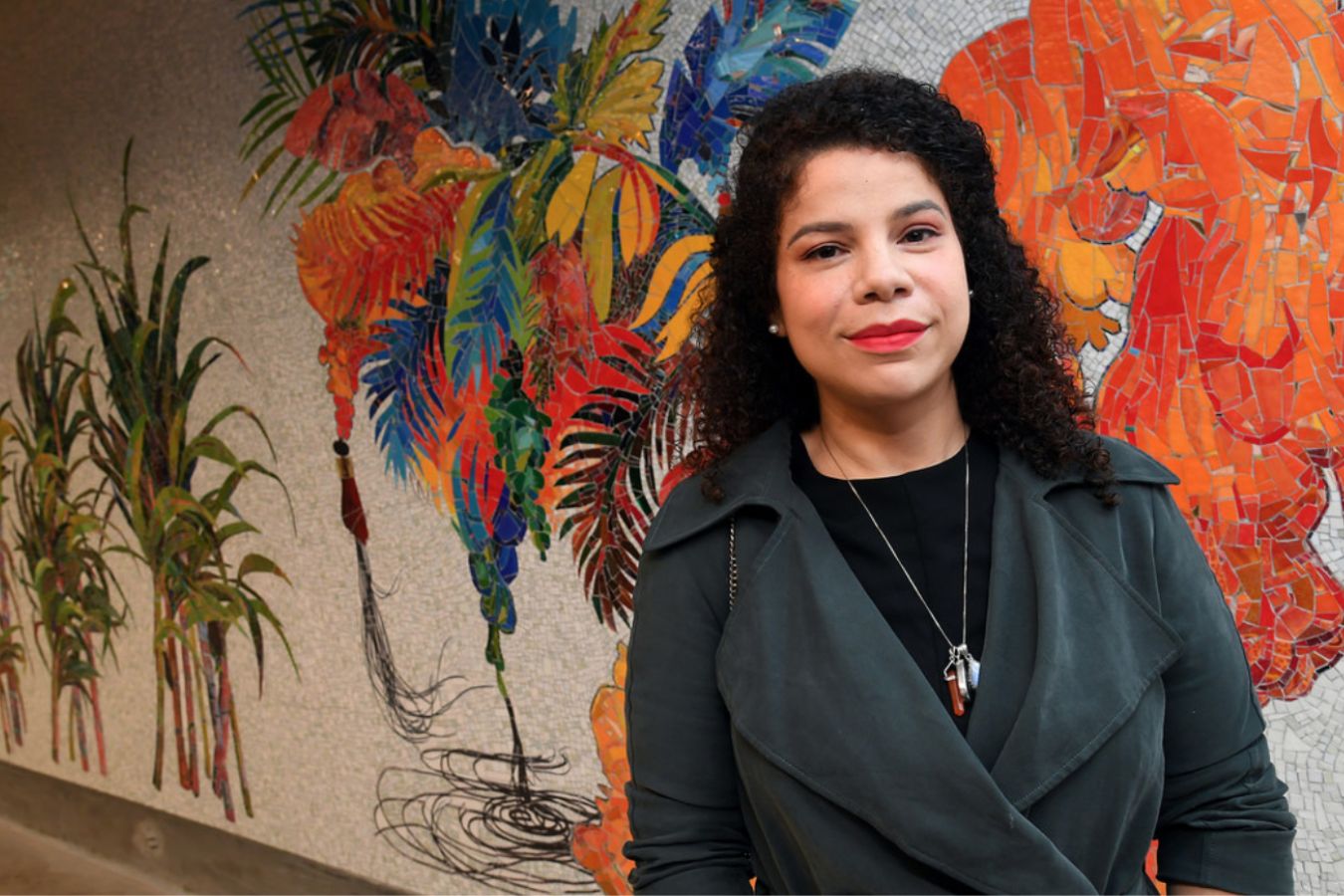
The 2025 sale of Untitled (Colonization in America, Visual History Wall Map…) for $1.11 million at Christie’s was a defining moment for Báez and Dominican art. The work, a rich interplay of cartographic imagery and layered visual texture, sold for more than five times its high estimate and set the artist’s personal auction record.
This achievement not only elevated Báez’s market stature but also signaled a broader recognition of diasporic perspectives in contemporary art, challenging long-standing hierarchies in the global art world.
Painting by Haitian-Puerto Rican Artist Jean-Michel Basquiat Painting Sells for $41.7 Million Dollars
Legacy and Influence
Báez’s work has been exhibited at major institutions around the world, including the ICA Boston, Venice Biennale, Pérez Art Museum Miami, and numerous other museums and galleries. Her practice continues to expand, embracing new materials, larger scales, and more ambitious installations.
Her art resonates because it is visually stunning and intellectually urgent, probing ideas of identity, displacement, belonging, and memory with color, form, and symbolism that are as expressive as they are thought-provoking.
Firelei Báez’s story, from a border town in the DR to the heights of the international art market, illustrates the power of art to reframe history, uplift overlooked voices, and expand the horizons of cultural imagination. Her record-breaking success is not just a milestone of market value, but a testament to the enduring significance of her vision.