


El Abayarde is the debut album by the Puerto Rican rapper Tego Calderón. It included the singles “Pa’ Que Retozen”, “Guasa Guasa” and “Al Natural”. It was released in 2002 through White Lion Records selling over 50,000 copies its first week between Puerto Rico and the United States.
The album sold 132,000 copies in the US and more than 350,000 copies worldwide. El Abayarde was nominated for a Lo Nuestro Award for Urban Album of the Year and Best Rap/Hip Hop Album in the 4th Latin Grammy Awards in 2003.
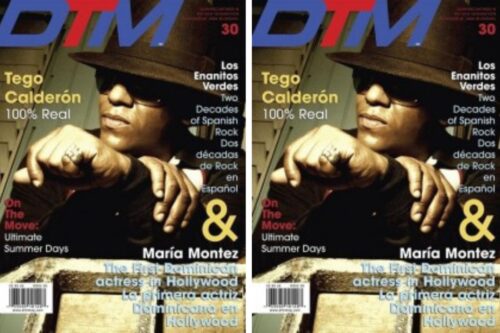
It was one of the first reggaeton albums to be successful in the United States, with five singles released, it is the album with the most singles in Tego Calderon’s career.
The tracks were produced by Luny Tunes, DJ Nelson, Maestro, Rafy Mercenario, DJ Joe, DJ Adam, Echo and Coo-kee.
El Abayarde is one of the albums that help revolutionized reggaeton worldwide, along with Daddy Yankee’s Barrio Fino, Ivy Queen’s Diva and Don Omar’s The Last Don.
It was the most purchased reggaeton album in Puerto Rico of that year, helping it break the record for the most sales as a reggaeton CD in its first week. The album is credited with introducing reggaeton to mainstream audiences in places like Houston, New York, Miami and Los Angeles in the United States.
For Tego Calderón, the most important part of his name and career is his being an original figure. “It makes me happy to be who I am and know that I don’t have to put on a fake persona. I am the same everywhere I go,” he says with pride. It’s precisely his sincerity and unique style, when he tells what he is thinking that stands out about his personality.

The Underdog / El Renegado:
Tego states that The Underdog/El Renegado, production is a reflection of how he feels. He explains that the album which was be released in 2006 gave fans something different. “I have included themes that have not been touched before as I tried to fill a void within the genre.
I am very happy because it’s a good production unlike anything that’s currently in the market,” he said, at the time. One of the most appealing aspects of the album is that it includes salsa. He proudly explained that the Afro-Antillean culture is present in the album and that the production includes collaboration with musical greats.
The first single of the album was titled “Los Maté” (“I Killed Them”), which has garnered much air-play on the radio. During a press conference in Puerto Rico, Tego Calderón expressed that this new album is “a diary of sorts from my experiences. There are happy moments and sad ones”.
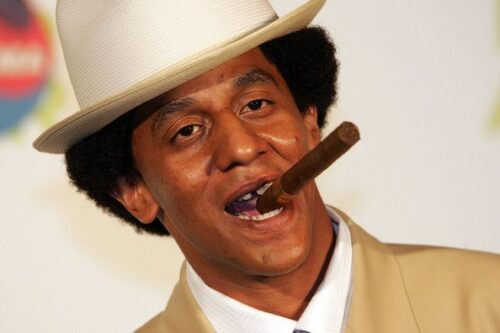
This time around, Tego decided not to use as much reggaeton and focus more on hip-hop. He is also a fan of salsa, blues, funk and reggae (the second single of the album, “Chillin'”, is a reggae song completely in Spanish) and he incorporates these styles in the album. Many fans were surprised, as they expected classic reggaeton.
The album garnered points in originality, making it stand out more than Daddy Yankee’s Barrio Fino en Directo and Don Omar’s King of Kings. It debut at 43 on Billboard 200 and at the Top of Us Latin Rhythm Album Chart. As of 2011, it sold 99,000 units in the United States.
Tego shared this with us:
Tego confesses to LT that he is not a fan of reggaeton, but he is a faithful follower of salsa. He recalls a few years back how his entrance into the genre was not something he expected. “I’m not a fan of reggaeton. I was accepted with the song Cosa Buena,” he says in between smiles.
Tego explains that during that time his goal was to breakaway, with the false belief that hip-hop artists, like himself, could not sing reggaeton. “For many that wasn’t allowed. Later they also said that those who sung reggaeton were sell outs. I decided to ‘throw in’ something witty about that. That’s how it all started. Of course, if there is someone I have to mention, of whom I am a disciple and I admire it’s Vico-C.”
Tego has created his empire without rushing. Without caring about how difficult it is, this is the terrain that he seems to enjoy, free from the stress of envy that his style has created.
“I don’t complicate myself. Many things entertain me, the majority of which are very simple. I like to go out with my family; I enjoy looking out at the sea, the fishes. I’m fascinated by anything having to do with the sea. My house overlooks reefs and for me being in my house is what entertains me the most,” he said.
Reggaeton is a music that has broken boundaries, without caring about language or culture. Everyday new representatives of the rhythm pop on the scene and for Tego this is a good sign, because he feels the genre needs to receive a fresh dose of creativity.
He says that he was in Venezuela, among many other places, and that the movement there can be compared to an epidemic. He believes that the reggaeton movement benefits from these new artists, but only if the roots of reggaeton aren’t forgotten.
“If they come to preserve the genre and they do what they have to do that’s great! They are definitely welcomed. At this moment, however, many similar products are being released from Puerto Rico, without much originality,” he said.
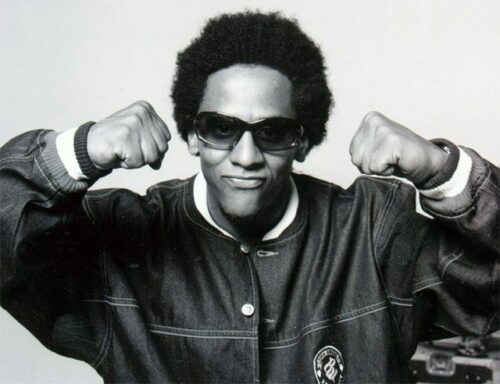
Tego is a relaxed conversationalist and he doesn’t seem to complicate himself with existential problems. He considers himself a strong man and who feels that the best way to channel sadness or anger is by further strengthening oneself.
He says that his songs come out of a thousand and one motive that crosses his mind as he is about to write. “Everything inspires me. A good beat is a lot of times my inspiration. I listen and think: ‘this is a challenge, this is difficult, and this motivates me.’
On an occasion when something sad happens to me or I’m upset, I’ll channel it through music. But if I’m sad, that doesn’t necessarily mean that something sad will come out of it. The way in which I deal with sadness is with strength and feelings, but not by crying. I overcome difficult times with strength, I leave crying for motherhood!” he says.
The release of albums like The Underdog does not intimidate Tego. He knows what he is capable of, and, although he sees his career at a crucial point, he considers himself prepared. He explains that it’s a challenge because he feels he has to prove that he can repeat what he did in the past with the production of El Abayarde.
“I don’t’ see challenges, all this for me is part of a crusade that I myself chose.” In the same way, he confesses that he has dreams. “Recording with Juan Luis Guerra and Ruben Blades is without a doubt one of my dreams. It would be an honor. They are two great artists which I have much respect for and an example for any artist to follow.”
Tego’s upbringing:
Calderón was born in Santurce, Puerto Rico. He is the son of Pilar Rosario Parrilla, a schoolteacher, and Esteban Calderón Ilarraza, a government worker for Puerto Rico’s Department of Health. He Moved along with his family at a young age from his native Puerto Rico to Miami, Florida, Calderón attended Miami Beach Senior High.
There he was exposed to several different cultures, eventually studying percussion and working as a drummer in a rock band. The band would cover songs produced by artists including Ozzy Osbourne and Led Zeppelin. He has noted that both of his parents were fans of Ismael Rivera, and that his father was also interested in jazz.
Calderon was influenced by both genres and incorporated them into his music. He eventually developed his own music style that combined elements of salsa, plena, dancehall, and hip-hop, focusing on aspects of urban life in his lyrics.
Films:
In addition to his musical work Tego Calderón appeared in the 2007 documentary project named Bling: A Planet of Rock. The project, which was created by the Dominican-American reporter Raquel Cepeda. The premise of the doc unites hip-hop and reggaeton artists in Africa, among them Kanye West, Jadakiss, Tego Calderon and others.
This project seeks to connect the artists with the people of Africa’s Sierra Leon and the daily drama they live through. It is a documentary about tragedy, stemming from the civil war that arose out of the market for diamonds. The hip-hop and reggaeton stars are the protagonists because they are among the primary consumers of the stone.
“Given the fascination for diamonds, the objective is finding out the reality that these people live only so that we can show off these diamonds. People without arms and families destroyed are only a few of the horrendous situations that they suffer. I think that the idea is that we change our way of thinking in respect to diamonds and that we continue spreading the message. I am open to it and I think that the objective can work for me,” he concludes.
Calderón made his acting debut in the film “Illegal Tender” produced by John Singleton. Calderón played the role of Choco, a Puerto Rican gangster whose character was written specifically for him by director Franc. Reyes.
Calderón turned down roles in both Feel the Noise and “El Cantante” and instead chose to appear in Illegal Tender out of respect for its producer. After convincing John Singleton that he wanted to appear in a comedy, Calderón was slated to appear in an upcoming Singleton film which casts him as the coach of a baseball team., but the movie was never produced.
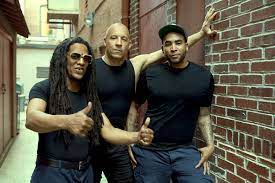
Calderón appeared along with Don Omar in Fast & Furious, Fast Five and The Fate of the Furious, the fourth, fifth and eighth installments of The Fast and the Furious franchise.