

by: John Rodriguez
This past Thursday, Venezuelan President Hugo Chaves revealed that he is fighting cancer. During a televised broadcast from Cuba, Chavez made the announcement after having a tumor removed while in the country and assured his countrymen that despite his health problems he is still capable of governing the country.
During the televised announcement, the 56-year-old president who appeared noticeably thinner and paler said that the surgery was necessary after a operation held three weeks earlier resulted in the removal of a pelvic abscess which eventually led to the removal of the tumor which contained “cancerous cells.” Chavez calls his latest situation the “new battle that life has placed before us.”
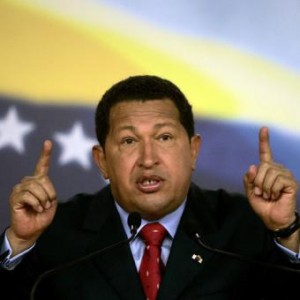
Reading from a prepared speech, Chavez stood at the podium adorned with the Venezuelan flag and a portrait of the 19th century independence hero Simon Bolivar with a stern and yet sad expression as he made the announcement. Chavez didn’t give much detail as to what type of cancer that was found or give any details to how he was treating it, but included that it was a mistake not having taken better care of his health through regular medical checkups and described it as a “fundamental error.”
There was no information given pertaining to how long Chavez will stay in Cuba to recover, and no information on when or where the message had been recorded. However, yesterday morning Venezuelans were given a morning surprise when they turned on their televisions to find Chavez had returned to the country unexpectedly. “I’m very happy to be home again,” Chavez said, while embracing both his daughters and brother on the tarmac in Caracus.
Gloria Torres, 50, describes Chavez’s return as being the “the best gift that could have been received by Venezuela on its 200th anniversary of its independence.” Although the president is loved by most of his fellow countrymen, some weren’t too keen about his return like Jose Manuel, a 52-year-old businessman who declined to give his last name, commented how he will “be buying some antidepressants,” now that Chavez was back in Venezuela.
Prior to his announcement, rumors circulated that Chavez’s health was in jeopardy. Last Tuesday, the government tried to awash the rumors by showing photos and videos of Chavez with Fidel Castro but it failed to change the growing speculations among Venezuelans. Then on Wednesday, the government announced that it was canceling a two day summit of Latin American leaders which Chavez would have hosted on the 200th anniversary of Venezuela’s declaration of independence from Spain next week citing Chavez’s health.
Chavez informed viewers that on June 11th his first surgery was carried out due to a “strange formation in the pelvic region that required an emergency operation due to imminent risk of generalized infection.” Once the operation was completed, Chavez’s doctor soon suspected other problems and was later informed about the tumor. A series of tests were then performed and “confirmed the presence of an abscessed tumor with the presence of cancerous cells, which made necessary a second operation that allowed for the complete extraction of the tumor.”
The Venezuelan President gave no information on when the second operation was performed, but said that his condition has been “evolving satisfactorily while I receive a complementary treatment to combat the different types of cells found, and thereby continue on the path to my complete recovery.”
With his health in question and his ability to continue as the country’s President, Chavez further generated speculation within the country regarding the President’s allies and who could take his position if it needed to be filled. One candidate is Vice President Elias Jaua who has led the government during Chavez’s absence. The other is Chavez’s elder brother, Adan, who has recently becoming a public figure by rallying supporters over the weekend to hold a weekend prayer for Chavez.
As the message came to a close, Chavez addressed the viewers, “Now I wanted to speak to you from this steep hill, from which I feel that I’m coming out of another abyss…I think we’ve achieved it. Thank you, my God.”
According to the Venezuelan News Agency, Vice President Jaua commented on the current situation and addressed the people of Venezuela telling them that, “it’s up to us, people and government, to keep advancing. We feel extremely optimistic about this battle that President Chavez has begun for a full recovery of his health.”
Supporters of Chavez gathered in Plaza Bolivar in downtown Caracas chanting their devotion for the President claiming. “Chavez, friend, the people are you!” While supporters of Chavez backed the ailing President, a coalition of oppositions and their leaders did not comment on the President’s health.
However before making the announcement regarding his health, Chavez’s opposition demanded more information regarding his condition even going as far as urging Chaves to temporarily cede his role as President to his Vice President while he recovers. Chavez’s allies counter the opposition’s suggestions by recommending he stay in control of the government even as he is recovering.
As his speech came to an end, Chavez recited the revolutionary slogan used often by Castro which states, “Forever onward toward victory! We will be victorious!” and added a touch of his own to the bit, “Until my return!” A promise he has partially kept up to now that he is back home and trying to fight the cancer within him.