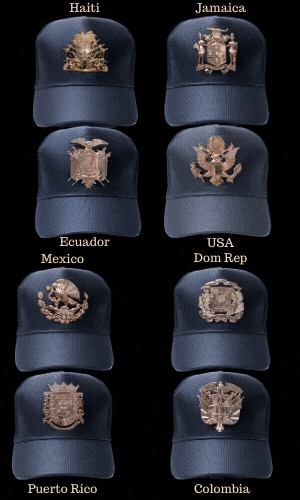



America is becoming more Latino these days, but no area is getting more of the Latino settlers than the good ole South.
According to data released last week by the Pew Hispanic Trends Project, Alabama was at the very top of the list out of a listing of 10 States with the fastest growing Hispanic Populations from 2000 to 2011.
Also, the gathered data showed that not one state amongst the list or research showed a significant decline of their Latino population. However, the data is not up-to-date regarding the time in-between 2011 and to the present.
While Alabama may be at the top having the most Latinos living in the state, the state just passed one of its strictest laws some are calling Draconian (Harsh). Aimed at cracking down on illegal immigration, the law follows in the footsteps of Arizona’s SB 1070 bill which permitted law enforcement to “question” any “suspected” illegal citizens.
According to the New York Times, the introduction of the law caused an exodus of Latinos residing in the state which may require a re-research on the findings.
Despite the immigration laws being passed that is upsetting the livelihood of Latinos, there is a booming growth in the south. The U.S. southwest remains the leading region of Latinos residing with states like New Mexico holding the highest population of 46.7% Latinos. Following after New Mexico is Texas, California, and Arizona.
While the data may not include 2012 and 2013, the surveys regarding the Latino population rising in the country since the result of the 2012 election showed Latinos being the powerhouse for votes is steadily coming true.
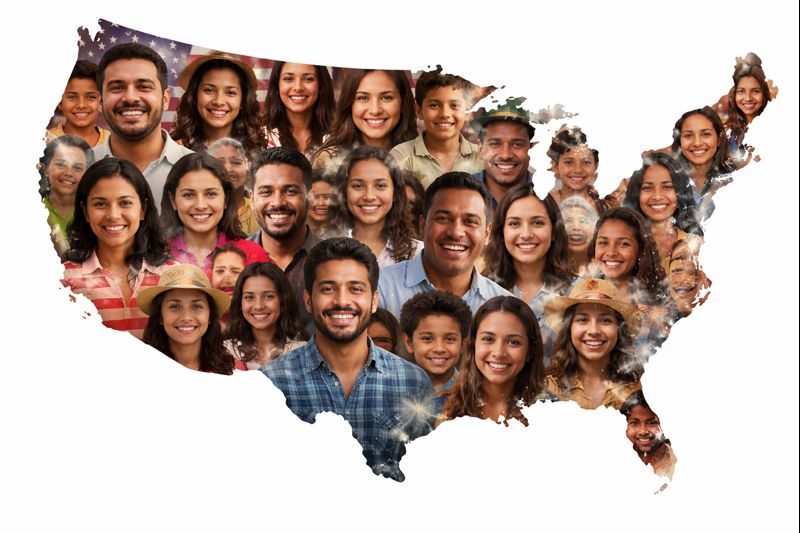
Beyond the early 2010s, the Latino presence in the South didn’t slow down, it evolved, deepened, and spread into places that once had little to no Hispanic footprint. What began as a wave tied largely to labor needs turned into something more permanent, families putting down roots, opening businesses, buying homes, and reshaping local culture in real time.
States like Georgia, North Carolina, South Carolina, Tennessee, and Florida saw Latino communities move from the margins into the mainstream. What was once a population concentrated in agriculture and construction expanded into healthcare, education, logistics, hospitality, and entrepreneurship. Latino-owned small businesses exploded across Southern cities and suburbs, from food trucks and restaurants to trucking companies, real estate firms, and tech startups. In many towns, Latino entrepreneurs revived struggling commercial corridors that had long been written off.
The demographic shift also brought a younger population to regions facing aging workforces. Latino families helped stabilize school enrollments, sustain local economies, and fill labor gaps that many Southern states were struggling to address. Over time, the narrative shifted from “new arrivals” to neighbors, coworkers, and community leaders. Spanish-language churches grew alongside bilingual classrooms, Latino radio stations, and cultural festivals that became annual staples, not niche events.
Politically and civically, the growth became harder to ignore. Latino voters, once overlooked in much of the South, began influencing local elections, school boards, and policy conversations. While immigration laws and enforcement continued to create fear and tension in certain states, the reality on the ground showed something different, Latino communities weren’t disappearing, they were adapting. Many moved from rural areas to mid-sized cities, while others stayed and organized, advocating for worker protections, education access, and fair treatment.
Perhaps most importantly, the Southern Latino story after 2011 became less about migration and more about belonging. Second-generation Latinos came of age with Southern accents, Friday night football, church potlucks, and deep regional ties, all while maintaining strong cultural connections to their heritage. The South didn’t just absorb Latino culture, it was changed by it.
Today, the growth of the Latino population in the South represents one of the most significant demographic shifts in modern American history. It’s not a temporary trend or a political talking point, it’s a long-term transformation. From the Carolinas to Texas, Latinos are shaping the future of the South’s economy, culture, and identity, proving that the region’s story is no longer just black and white, but increasingly brown, bilingual, and deeply woven into the American fabric.