

Borinkis in Paradise: Puerto Ricans Making Hawai‘i Home
“They didn’t just come here to cut cane, they planted roots, music, and feasts.”
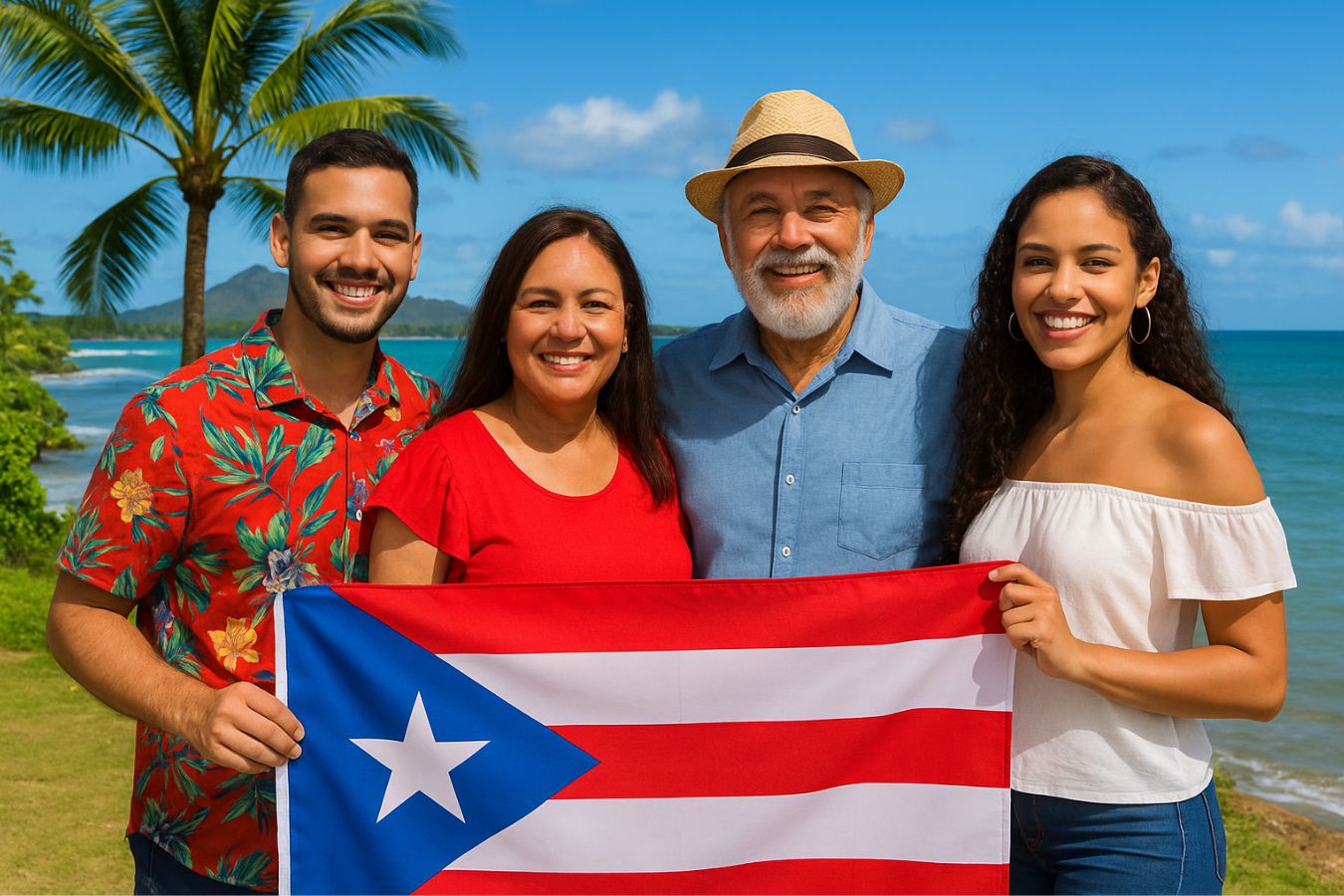
When you think of Puerto Ricans in the United States, your brain probably jumps to the mainland, New York, Orlando, or barrio life in Chicago. Few people immediately picture a jíbaro dancing under a palm tree, but Puerto Ricans have been part of Hawai‘i’s multiethnic tapestry for more than a century. They came by ship and train, they stayed for sugar jobs and ohana, and over generations they helped shape the island rhythm in small, surprising, and enduring ways.
How Puerto Ricans first landed in Hawai‘i, and why they stayed
At the turn of the 20th century, Puerto Rico was reeling. Two devastating hurricanes in 1899 destroyed crops, left thousands jobless, and collapsed the island’s sugar economy. Hawai‘i’s sugar planters, who suddenly needed experienced cane workers, organized recruitment drives.
Between about 1900 and 1902, plantation recruiters moved families from Puerto Rico to Hawai‘i in multiple voyages, roughly 5,800 people in thirteen groups, bringing men, women, and children to work on plantations across the islands. Plantation managers often recruited whole families specifically because they wanted laborers who would stay put and form stable communities. Over time those families put down roots, married across local groups, and became part of Hawai‘i’s local culture.
Numbers, by the book, how many Puerto Ricans live in Hawai‘i today?
Counting the Puerto Rican population in Hawai‘i depends on how you measure ancestry, but recent demographic snapshots place Puerto Rican ancestry residents in the tens of thousands. Some compilations of 2020 Census data list roughly 46,000 Puerto Ricans living in Hawai‘i (this is an estimate based on detailed census breakdowns and stateside Puerto Rican counts).
Keep in mind, many people identifying as Puerto Rican may also report multiple ancestries, and the island’s high rate of mixed heritage means exact counts vary depending on whether you use “alone” or “in any combination” measures.
What “Borinki” means and the identity that grew here
Puerto Ricans in Hawai‘i often refer to themselves affectionately as “Borinkis,” a nod to Borinquen, the Taíno name for Puerto Rico. That local identifier speaks to a distinct identity that blossomed in Hawai‘I, it’s Puerto Rican, yes, but it’s also Hawai‘i-shaped. Scholars and community historians have explored a hybrid Borinki identity that mixes language, food, music, and family rituals with local customs, producing a Puerto Rican community that feels both island and Borinqueño.

Puerto Ricans never became the largest group in Hawai‘i, but their cultural footprint is visible in several ways.
- Music and parties: Puerto Rican musical traditions, from jíbaro folk songs to plena and salsa rhythms, arrived with families and blended into local festivities. On islands like Maui and Kaua‘i, annual dances and public celebrations have showcased Puerto Rican music alongside Hawaiian and Filipino forms, creating multiethnic parties with distinct island energy.
- Language and pidgin: Hawai‘i’s plantation era created a multilingual workplace. Puerto Ricans worked alongside Japanese, Filipino, Portuguese, Chinese, Korean, and Hawaiian laborers, and that mix contributed to the development of Hawai‘i Pidgin, a local vernacular that borrowed from many tongues. Puerto Ricans added Spanish rhythms and expressions to that linguistic stew.
- Food and family customs: Puerto Rican cooking traditions, arroz con gandules, pasteles, pernil style techniques, and festive sweets, were adapted with local ingredients. Community potlucks, parranda-style gatherings around the holidays, and family-centered fiestas strengthened bonds and introduced Borinki staples to neighbors. Scholarly and community accounts note these culinary crossovers as part of the Borinki identity.
- Community resilience and remembrance: Puerto Ricans in Hawai‘i commemorated their arrival and survival with centennial events and cultural programs that educate younger generations, helping to preserve a sense of history that might otherwise vanish in the islands’ multicultural current.

Puerto Rican organizations and cultural groups in Hawai‘I, who’s keeping the culture alive
- Maui Puerto Rican Association (MPRA): One of the most visible and active organizations in the state, MPRA organizes community events, dances, and cultural celebrations on Maui, and positions itself as the island’s largest Puerto Rican group. Their public events often feature traditional Puerto Rican music and dance, bringing Borinki culture into local public life.
- Puerto Rican Heritage Society of Hawai‘i: A community group dedicated to preserving and perpetuating Puerto Rican history, arts, and traditions across the islands. They engage in education and events that help keep memory alive, especially around major anniversaries and cultural celebrations.
- Puerto Rican Association of Hawaii (Honolulu / Kalihi): A local community point of contact in Honolulu that appears in public directories and local listings, and that supports Borinki families through community gatherings and outreach.
- Local cultural clubs and parish groups: In many neighborhoods, especially on Kaua‘i, Maui, and O‘ahu, smaller neighborhood clubs, church groups, and dance troupes keep traditions alive through seasonal events, music nights, and intergenerational teaching. These groups are often informal, but they are the lifeblood of everyday cultural continuity.

Challenges, assimilation, and visibility
Borinkis face the same balancing act other small diasporas wrestle with, they want to preserve language and tradition while succeeding in a multiethnic world. Hawai‘i’s population is so blended that many Puerto Rican descendants identify with multiple ancestries, which weakens simple categories but strengthens cultural hybridity. That hybridity is a source of resilience.
Borinkis often act as cultural connectors between Latino, Hawaiian, Filipino, and mainland communities. Academic researchers have documented both the cultural retention and the losses — like younger generations losing Spanish fluency — and local activists keep pushing for heritage programs in schools and community centers.
Why the Borinki story matters
Puerto Ricans in Hawai‘i represent a strand in the larger tapestry of American migration stories, they remind us how disasters, labor markets, and recruiters remade families’ lives at the start of the 20th century, and they show how identity can be both portable and place-made.
In Hawai‘i, Puerto Rican songs, food, and fiestas didn’t simply survive, they mixed, adapted, and became something new. The Borinki identity is a reminder that the Puerto Rican story in the U.S. is not only East Coast or mainland, it’s also tropical, Pacific, and quietly powerful.