


The Hispanic community in the United States boasts a rich tapestry of last names, each with its unique significance and historical background. As per the U.S. census, the most prevalent Hispanic surnames have been listed above, offering a glimpse into our diverse heritage. Many of us either bear these last names or have acquaintances who do. In this article, we embark on a journey to delve deeper into the origins and meanings behind these names, unraveling their fascinating historical narratives.
 Let us begin with Garcia.
Through historical translations, we discover that Garcia translates to “bear” in both Spanish and French. Now, let’s explore the roots of this name. Many of these last names trace their origins back to Spain, specifically a kingdom that was a part of the Spanish realm. Garcia can be traced as far back as the Middle Ages, originating in the Kingdom of Navarre.
From there, the Garcia surname spread throughout Spain, proliferating across various other kingdoms. It even made its way to France, where it underwent slight changes in pronunciation, such as Garcon. In medieval Spain, Garcia was not only used as a last name but also found popularity as a first name among families of diverse social hierarchies.The accompanying crest depicts one of the many Garcia family crests. Over time, this name transcended borders and reached the New World, finding a home in countries like Cuba, Mexico, Honduras, and numerous South American nations. Next, we delve into the name Rodriguez,:
It originates from an intriguing Germanic heritage tied to the Visigoths’ invasion of Spain in the 5th century. The original Germanic name was “hrodric,” meaning renowned power or famous power.The earliest recorded usage and spelling of the Rodriguez family name can be found in Heinrich Rodigerus, mentioned in 1260 in Lubeck, Germany. However, it wasn’t until much later, in 1536, through the church registers of Rodriquez de Leon and in 1662 through Juan Rodriquez de Santos, both in Valladolid, Spain, that this name was officially adopted. In Spanish, the name evolved to signify “the son of rodrick,” as the suffix “ez” denotes “the son of.”The diverse range of Rodriguez family crests showcases the various lineages associated with this name. The early records of Rodriguez in the New World date back to the 1560s, featuring names like Vicente Rodríguez, Beatriz Rodríguez, Sebastian Rodríguez, and Bartolomé Rodríguez. These individuals settled in regions like Peru, Puerto Rico, Colombia, Dominican Republic, Nicaragua, and many other Central American countries. Now let us explore the third most popular surname, Hernandez.
The name Hernandez translates to “son of Fernando” and originates from the Visigothic name Ferdinand, meaning “traveler” or “bold voyager.” The name gained prominence during the reign of King Ferdinand III of Castille and León, who led the Reconquista of Spain against the Moors (Muslims).The earliest mention or appearance of the Hernandez family name in the New World can be traced to Brazil in the mid-1600s. Further mentions of the name can be found in Mexico, Nicaragua, Puerto Rico, and various other nations.
 Moving on, we come to the Martinez family name:
Ranked as the fourth most popular Hispanic surname. Let us explore the original meaning behind this name. Similar to Rodriguez, Martinez translates to “son of Martin” in a way. Martin, originating from the Latin name Martinus or Mars, is associated with the Roman god of war and fertility.The Christian faith brought the name Martinez to Spain during the early years of the 4th century, where it underwent a transformation into the common name we recognize today. One of the earliest recorded spellings of the name in Spain was by Martínez di Castille, around 1580 in Madrid, during the reign of King Philip II. In the New World, accounts of the name emerged around the 1520s.Notably, Juan Martínez de Ampués, who served as the governor of Santo Domingo and later Curaçao, carried this surname. Other mentions of Martinez can be found in Peru, Nicaragua, Cuba, and other regions during the mid-1500s. Lastly, we turn our attention to the surname Lopez:
Ranking as the fifth most popular Hispanic last name. The origin of the Lopez surname can be attributed to the Latin word “Lupus,” meaning “wolf.” It is important to note that names ending in “ez” often signify “Son of” in Hispanic surnames.Hence, Lopez translates to “Son of the Wolf,” with variations observed in different regions like Portugal, Romania, Italy, and others. The name is presumed to have arrived in Spain, specifically the Kingdom of Castille, through the Roman conquest and subsequent rule of the Iberian Peninsula.Early mentions of the name in the New World can be found in Mexico, Chile, Hispaniola, Colombia, Nicaragua, and several other South American countries. The Lopez name boasts numerous famous individuals throughout history and the present, including notable figures like Jennifer Lopez, George Lopez, and Mario Lopez.
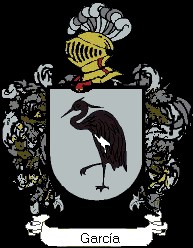 Let us begin with Garcia.
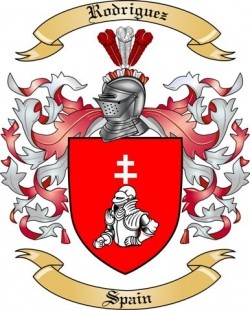 Next, we delve into the name Rodriguez,:
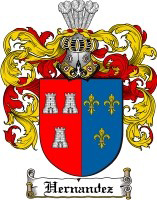 Now let us explore the third most popular surname, Hernandez.
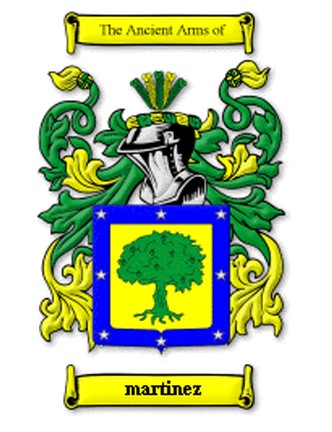 Moving on, we come to the Martinez family name:
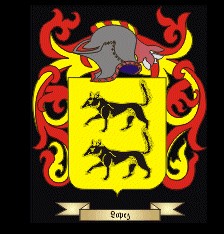 Lastly, we turn our attention to the surname Lopez:
Most Common Hispanic Last Names in the United States (US Census)
| Last Name/Surname | Total1 | Hispanic2 | Percentage3 | Rank4 | |
| GARCIA | 1,166,120 | 1,073,180 | 92.03% | 1 | |
| RODRIGUEZ | 1,094,924 | 1,026,710 | 93.77% | 2 | |
| HERNANDEZ | 1,043,281 | 989,969 | 94.89% | 3 | |
| MARTINEZ | 1,060,159 | 984,994 | 92.91% | 4 | |
| LOPEZ | 874,523 | 812,607 | 92.92% | 5 |
Our last names carry profound stories and often hold hidden information about our ancestry. While I make no claims of expertise in the realm of names and their histories, conducting research on your family name can unearth previously unknown historical connections. If your surname is not listed here, do not be discouraged. Feel free to explore the meaning and history behind your own family name, and you might be pleasantly surprised by the fascinating revelations you uncover. And thus concludes our history lesson for the week.