

If you have spent any amount of time walking down Franklin Avenue in Crown Heights, Brooklyn, you already know the vibe. You can smell the perfectly seasoned food, hear the faint pulse of a bassline through a storefront, and feel the kind of community warmth that you just cannot manufacture. Well, New York City finally put some respect on it. On September 24, 2026, the city officially co-named a beloved stretch of Franklin Avenue as “Little Panama Way”.
This is not just a cosmetic upgrade, it is a permanent receipt for a culture that has been holding down the neighborhood since the late 1940s and 1950s. The ceremonial stretch runs from Bergen Street to President Street, spanning several blocks of pure historical significance.
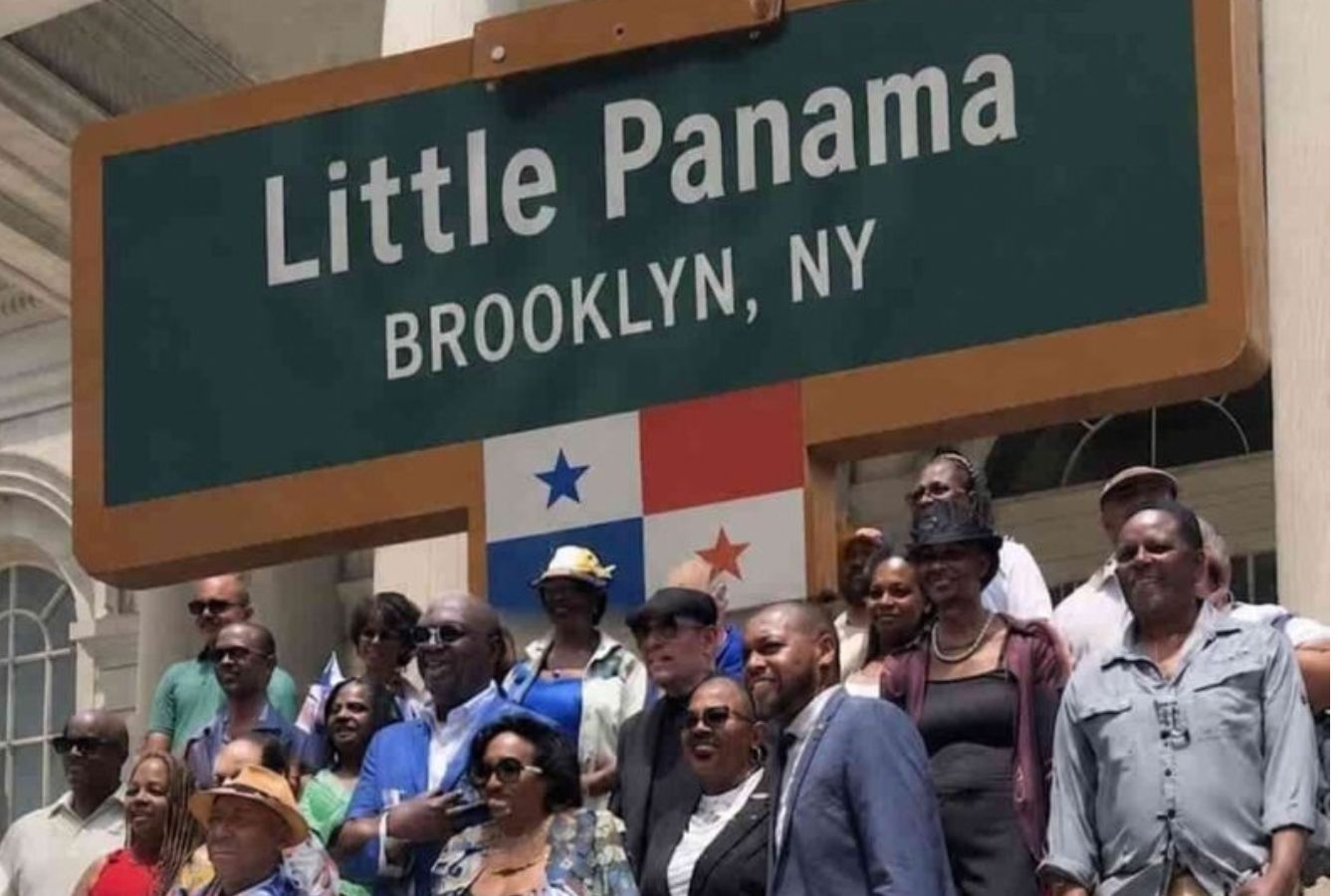
Getting this sign put up took a village, or more accurately, a massive team of relentless community leaders and heavy-hitting dignitaries. The effort was heavily pushed by the public policy think tank Panama 507 Roundtable Group, founded by Dr. Gregorio Mayers. Local political champions like NYC Council Members Crystal Hudson and Sandy Nurse, who happens to be Panamanian-born, fought to get the measure approved through the City Council earlier this summer.
The unveiling was such a big deal that even the actual President of Panama, José Raúl Mulino, and First Lady Maricel Cohen de Mulino flew into town to pull off the curtain. For US Latinos who know the struggle of keeping your roots alive in the concrete jungle, seeing a foreign head of state standing on a Brooklyn corner to honor local immigrants is the ultimate validation.
Click to see it >>> Rubén Blades: Singer, Songwriter, Actor, Lawyer & Politician
The Loudest, Proudest Saturday in Brooklyn
You cannot talk about Little Panama Way without talking about the event that has kept this corridor alive for decades, the Panamanian Day Parade. Organized by the Day of Independence Committee of Panamanians in New York, known as DICPNY, this massive cultural display is celebrated every October, since 1995.
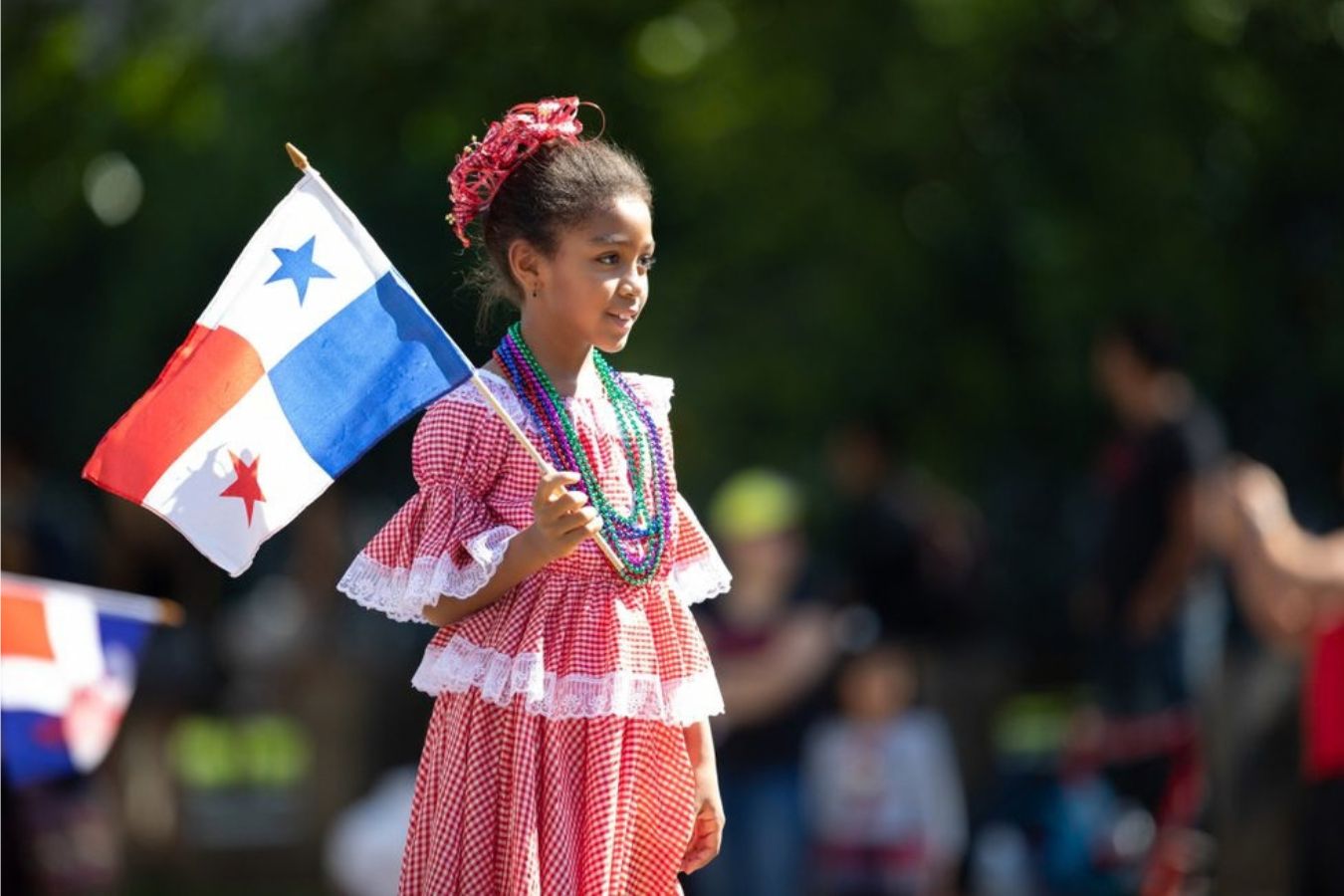
DICPNY was formed back in 1995 by Mauricio Alleyne to give the diaspora a way to celebrate Panama’s separation from Colombia. Because November weather in New York is an absolute gamble, the community smartly holds the festivities in October, allowing marching bands to perform here before heading over to Manhattan’s Hispanic Day Parade the next day.
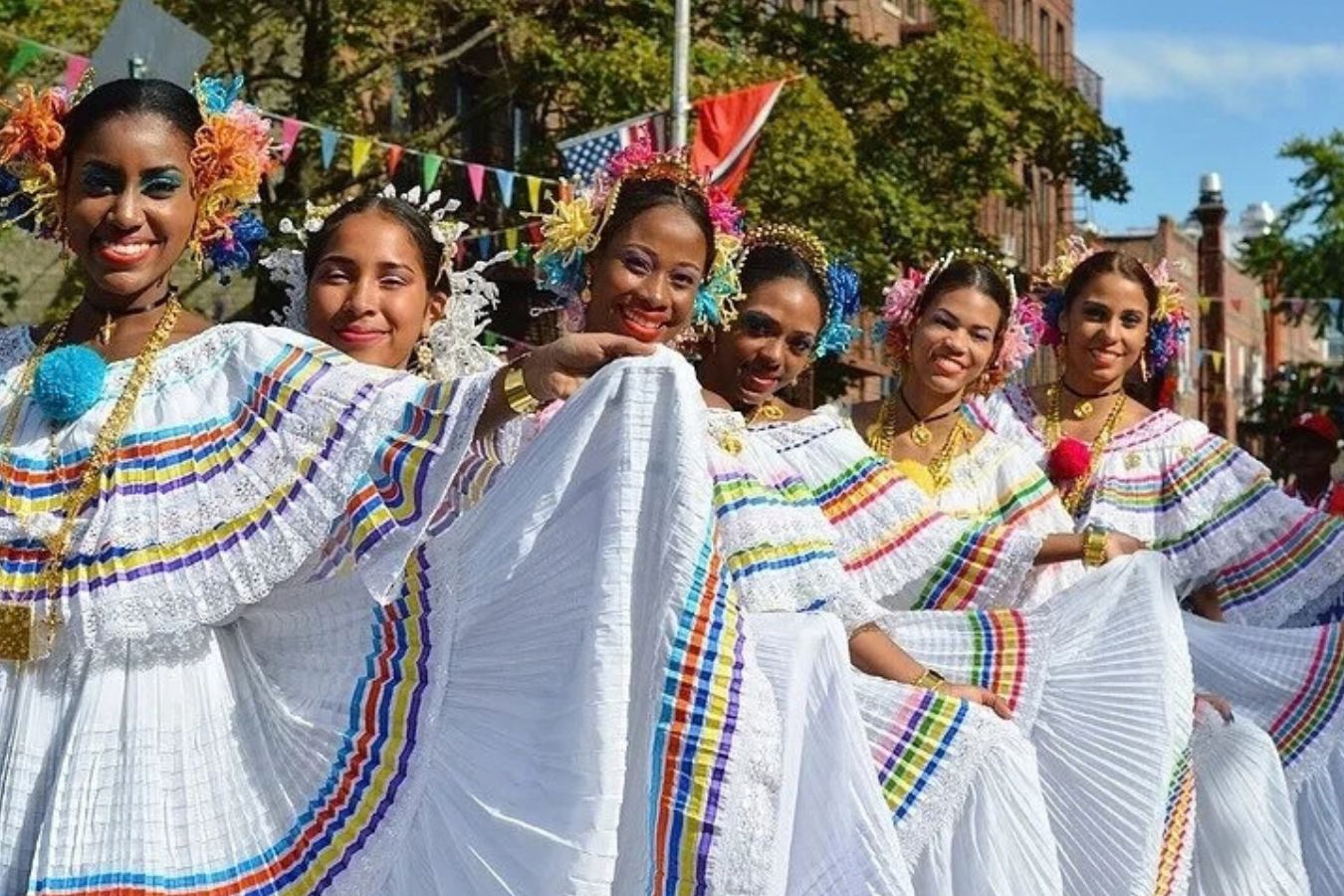
Outside of the isthmus itself, this is officially the largest Panamanian parade in the entire world. If you plan on attending, leave your desire for personal space at home. The air fills with the thunderous rhythm of traditional drum and bugle marching bands, the bright colors of polleras, which are stunning, hand-woven national dresses, and the unmistakable sounds of Típico music mixing with early-school reggae en Español. The route kicks off at Franklin Avenue and Bergen Street, winds its way down to President Street for the judges’ reviewing stage, and wraps up with an epic street festival on Classon Avenue.
Click link or this story >>> (Gone too Soon) Rapper Pop Smoke’s Panamanian & Jamaican Roots
The Blueprint of the Diaspora
There are roughly 100,000 to 200,000 Panamanians living across the United States, and New York has always been the undisputed cultural headquarters, housing a massive portion of that population. The community here is beautiful, complex, and deeply rooted in Afro-Latino history.
When the U.S. was building and operating the Panama Canal, waves of workers, many with West Indian roots from Jamaica and Barbados, later migrated straight to the Northeast, bringing a unique dual identity with them. They are the original bridge builders of New York’s West Indian and Latino fusion.
That dual heritage is exactly why Panamanian culture hits so close to home for diverse US Latinos. Take the music, for instance. Panama is literally the birthplace of Reggae en Español, the foundational DNA of modern reggaeton. Pioneers took Jamaican dancehall riddims, spit Spanish lyrics over them, and exported the sound straight to New York clubs. If you enjoy urban Latin music today, you owe a thank you note to Panama.
Click to reat it >>> A Dominican Man, Juan Rodriguez was New York’s First Immigrant
Then, there is the food, which is a glorious, carb-heavy masterclass in flavor. We are talking about empanadas, carimañolas, which are yuca fritters stuffed with seasoned meat, hearty sancocho chicken soup, and tamales wrapped in plantain leaves. It is comfort food that speaks the universal language of the Latino household, reminding everyone of their abuela’s kitchen, no matter which country’s flag is hanging from their rearview mirror.
With Little Panama Way finally anchored into the New York street grid, the city has codified what locals have known for seventy years: this community did not just move into Brooklyn, they built it.