

José E. Feliciano: From Puerto Rico to MLB Ownership
José E. Feliciano has just done something that would have sounded almost impossible a generation ago: the Puerto Rican businessman, investor and philanthropist is now one of the most powerful Latino figures in Major League Baseball.
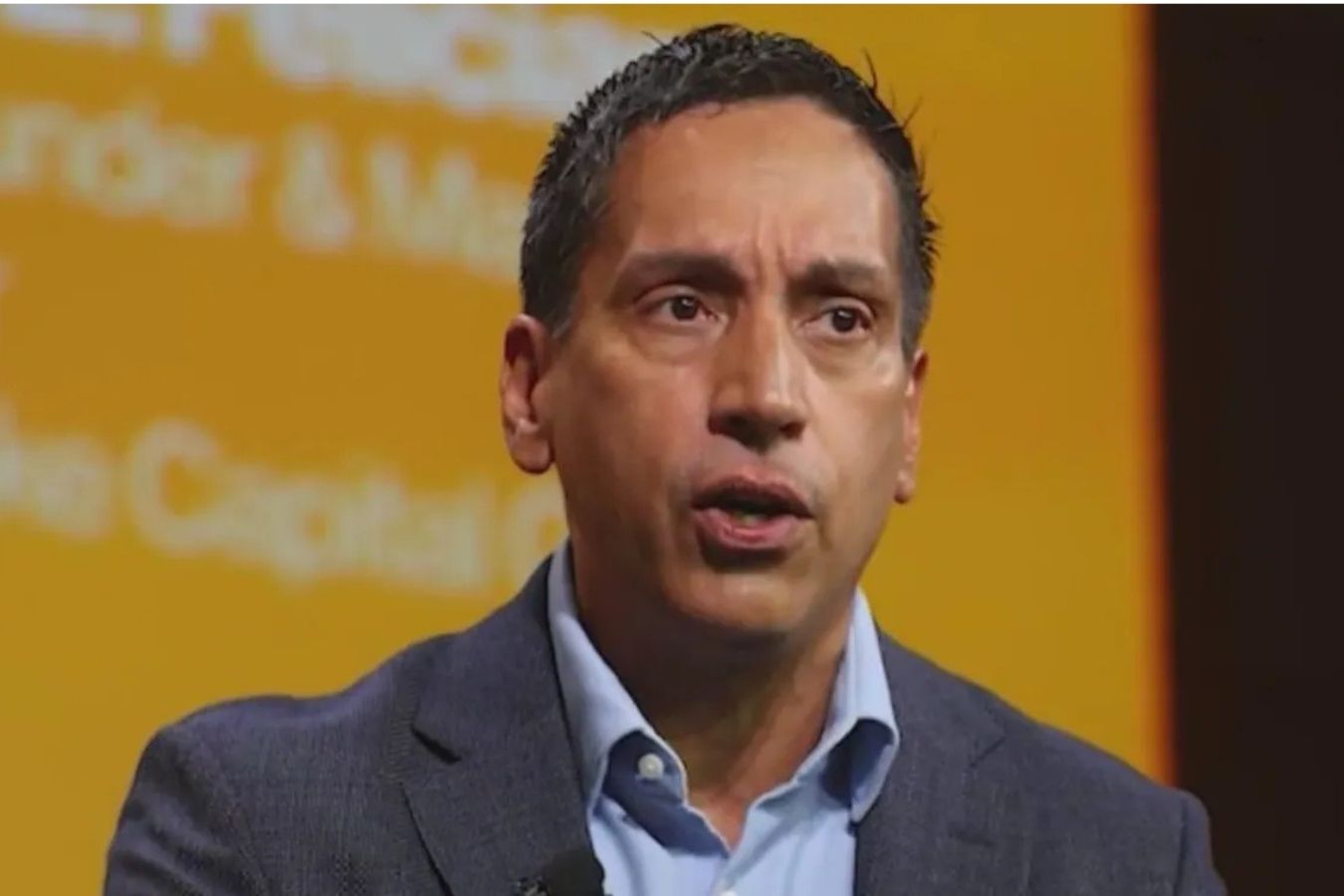
He bought the San Diego Padres, alongside his wife and business partner, Kwanza Jones, leading an investment group that acquired control of the franchise at a reported valuation of $3.9 billion.
That number is not a typo.
It is also not just another rich-guy sports purchase.
For Feliciano, becoming an MLB owner represents the latest chapter in a career that has taken him from Puerto Rico to Princeton, from investment banking to private equity, from a failed technology venture to billionaire status, and eventually into the ownership suites of professional sports.
The Padres deal also carries a larger cultural significance. Feliciano is Puerto Rican, and his arrival as the controlling owner of a Major League Baseball franchise makes him only the second Latino principal owner in MLB history, according to reports surrounding the transaction. (the other owner is Arte Moreno, a Mexian-American who became the first Latino majority owner in 2023 when he purchased The Los Angeles Angels).
For a sport whose history is deeply intertwined with Latino baseball culture, that is a pretty big swing.
A Puerto Rican Beginning
José E. Feliciano was born in Puerto Rico, a place where baseball is much more than a game.
It is culture.
It is family.
It is neighborhood conversation, childhood dreams and, for generations of Puerto Ricans, a connection to the wider Latino experience.
Feliciano has carried that connection with him throughout his career.
Today, he moves comfortably through the worlds of private equity, technology, finance, philanthropy and professional sports. But his résumé was not handed to him. His path began with education and ambition, and it eventually led him to some of the most elite institutions in America.f Stanford University’s Graduate School of Business.
At Princeton, he was not simply collecting academic credentials. He was laying the foundation for a career that would eventually put him in rooms where billion-dollar decisions were being made.
Interestingly, his Princeton connection has come full circle.
In 2023, Princeton dedicated two new undergraduate residential buildings in honor of Feliciano and Jones. The couple’s names became part of the university’s physical landscape, an especially meaningful milestone given how central education has been to their story.
Feliciano and Jones have also supported education through substantial philanthropy, including a $20 million gift to Princeton.
In other words, the kid from Puerto Rico eventually returned to one of America’s most prestigious universities not as a student, but as someone helping shape its future.
Meet Alex Cohen, the Puerto Rican Wife of NY Mets Owner Steve Cohen
He Didn’t Start Out as a Billionaire
Feliciano’s career did not follow the predictable billionaire script.
After Princeton, he entered the world of investment banking, working at Goldman Sachs.
Investment banking gave him something extremely valuable: a front-row seat to how businesses are financed, acquired, restructured and transformed.
But Feliciano wasn’t content to remain a spectator.
After graduating from Stanford in 1999, he took an unexpected detour into the technology world during the dot-com boom.
He joined govWorks, an internet company that became famous in part because its rise and collapse were chronicled in the documentary Startup.com.
The company ultimately failed.
For many people, that might have been the end of the entrepreneurial experiment.
For Feliciano, it became an education.
He has described himself as an ex-banker who became a failed dot-com entrepreneur before eventually finding his way into private investing. Rather than treating the failure as a career-ending embarrassment, he used it as a lesson in business, risk and capital.
And that lesson would become extremely valuable.
The Birth of Clearlake Capital
Feliciano eventually joined Tennenbaum Capital Partners, where he gained experience in private investing, credit and turnarounds.
It was there that his professional relationship with Behdad Eghbali developed.
In 2006, Feliciano and Eghbali co-founded Clearlake Capital Group.
That decision changed everything.
Clearlake was built around investing in businesses and helping them grow, improve operations and create long-term value. The firm’s investment interests have included technology, industrial companies, consumer businesses and other sectors.
What began in 2006 with three employees and a $182 million first fund eventually became a global investment powerhouse.
Clearlake’s growth has been extraordinary. The firm reported approximately $90 billion in assets under management in 2025, and its expansion in 2026 has pushed the broader platform’s reported assets significantly higher.
This is where Feliciano’s fortune was largely created.
He didn’t become wealthy by founding one company, selling it and walking away.
He built wealth by becoming exceptionally good at something that most people find painfully complicated: allocating capital and creating value through investments.
That skill would eventually take him from Wall Street to the world’s biggest sports franchises.
Bayron Matos Amazing Journey From Dominican Republic to the NFL
From Private Equity to Chelsea FC
Feliciano’s sports ambitions did not begin with baseball.
In 2022, Clearlake became part of the investment group led by Todd Boehly that acquired English soccer powerhouse Chelsea Football Club in a transaction valued at approximately $5.4 billion in purchase price and commitments.
Suddenly, Feliciano was no longer simply an investor in boardrooms.
He was involved in global sports.
Chelsea demonstrated something important about Feliciano’s approach.
He wasn’t buying sports teams simply because he liked sports.
He was applying the same principles he had used throughout his investment career: identify valuable assets, understand the operation, invest strategically, build infrastructure and create long-term value.
Then came baseball.
Enter the San Diego Padres
In 2026, the opportunity arrived.
The family of the late Padres owner Peter Seidler agreed to transfer control of the franchise to an ownership group led by José E. Feliciano and Kwanza Jones.
The reported valuation?
$3.9 billion.
That figure shattered the previous MLB franchise-sale record, established when Steve Cohen purchased the New York Mets for approximately $2.42 billion in 2020.
MLB owners unanimously approved the new Padres ownership group on August 17, 2026.
Feliciano was named the club’s control person, while he and Jones jointly lead the ownership group.
And just like that, a Puerto Rican-born businessman became one of the most influential owners in America’s national pastime.
Why the Padres?
There is a business case for the Padres that goes well beyond baseball.
San Diego is a major American market with a passionate fan base, strong attendance and a franchise that has been increasingly competitive.
The Padres have reached the postseason four times in six seasons, and attendance has become one of the team’s biggest strengths.
The franchise also occupies a unique position in San Diego. The Padres are the city’s only Major League team, giving the club an unusually powerful relationship with its community.
Feliciano and Jones have made it clear that they want to build on that relationship rather than simply write checks and watch games from an owner’s box.
Their stated goal is straightforward:
Win a World Series.
The Padres have never won one.
So Feliciano isn’t walking into a franchise with a championship trophy sitting comfortably in the lobby.
He’s walking into a city that has been waiting.
A Baseball Owner Who Understands the Culture
Perhaps one of the most memorable moments of Feliciano’s introduction as a Padres owner came when he stepped onto the field wearing No. 21.
The number was a tribute to one of Puerto Rico’s greatest baseball heroes, Roberto Clemente.
That was not a random fashion choice.
Clemente represents much more than baseball to Puerto Ricans and Latinos around the world.
He represented excellence, pride, humanitarianism and the belief that athletic success carries a responsibility to the community.
Feliciano has spoken admiringly of Clemente’s legacy, and wearing No. 21 during his first major appearance as Padres owner was a subtle but powerful way of connecting his new position to his Puerto Rican roots.
It was also a reminder that, for Feliciano, the Padres are not merely another investment.
There is history here.
There is identity.
And there is symbolism.

His Partnership With Kwanza Jones
Behind Feliciano’s rise is another important part of the story: his partnership with Kwanza Jones.
Jones is not simply “the billionaire’s wife.”
She is an accomplished entrepreneur, investor, artist, philanthropist and former NCAA Division I athlete.
The two are life partners and business partners.
In 2014, they established the Kwanza Jones & José E. Feliciano Initiative, their family office and philanthropic platform.
Their work focuses heavily on four areas: education, entrepreneurship, equity and empowerment.
The couple says they have committed more than $250 million to their philanthropic and impact efforts.
That philosophy is now being carried into their ownership of the Padres.
Their message has been that they want to invest not only in the baseball operation but also in the fan experience, Petco Park and the broader San Diego community.
It is a familiar philosophy for Feliciano.
Invest.
Improve.
Build.
Repeat.
Family First
Feliciano and Jones have repeatedly emphasized the importance of family.
When MLB approved their ownership group, they described themselves as a family first and said that becoming Padres owners meant joining an even larger family.
That language is important because the couple has built much of their professional and philanthropic life together.
Their family office combines investment and philanthropy, allowing them to approach wealth not simply as something to accumulate, but as something that can be deployed toward education, entrepreneurship and community development.
For Feliciano, that philosophy also appears connected to his own journey.
His story is ultimately about access.
Education opened doors.
Failure taught lessons.
Finance provided a framework.
Private equity created wealth.
And philanthropy became a way of giving some of that opportunity back.
Keeping Puerto Rico Close
Feliciano may now spend his time in the world of billion-dollar transactions, private equity funds and professional sports, but Puerto Rico remains part of his identity.
That connection was visible immediately when he became a Padres owner.
At his introductory appearance, the Puerto Rican-born businessman made the Roberto Clemente tribute part of the moment.
And his broader philanthropic work has also included supporting projects connected to Puerto Rican culture and Latino representation.
The couple’s family office has supported PORTO RICO, a film project led by Puerto Rican artist Residente, reflecting their interest in helping tell stories connected to Puerto Rican identity and culture.
That matters.
Because there is a difference between being successful and remembering where your story began.
Feliciano appears determined to do both.
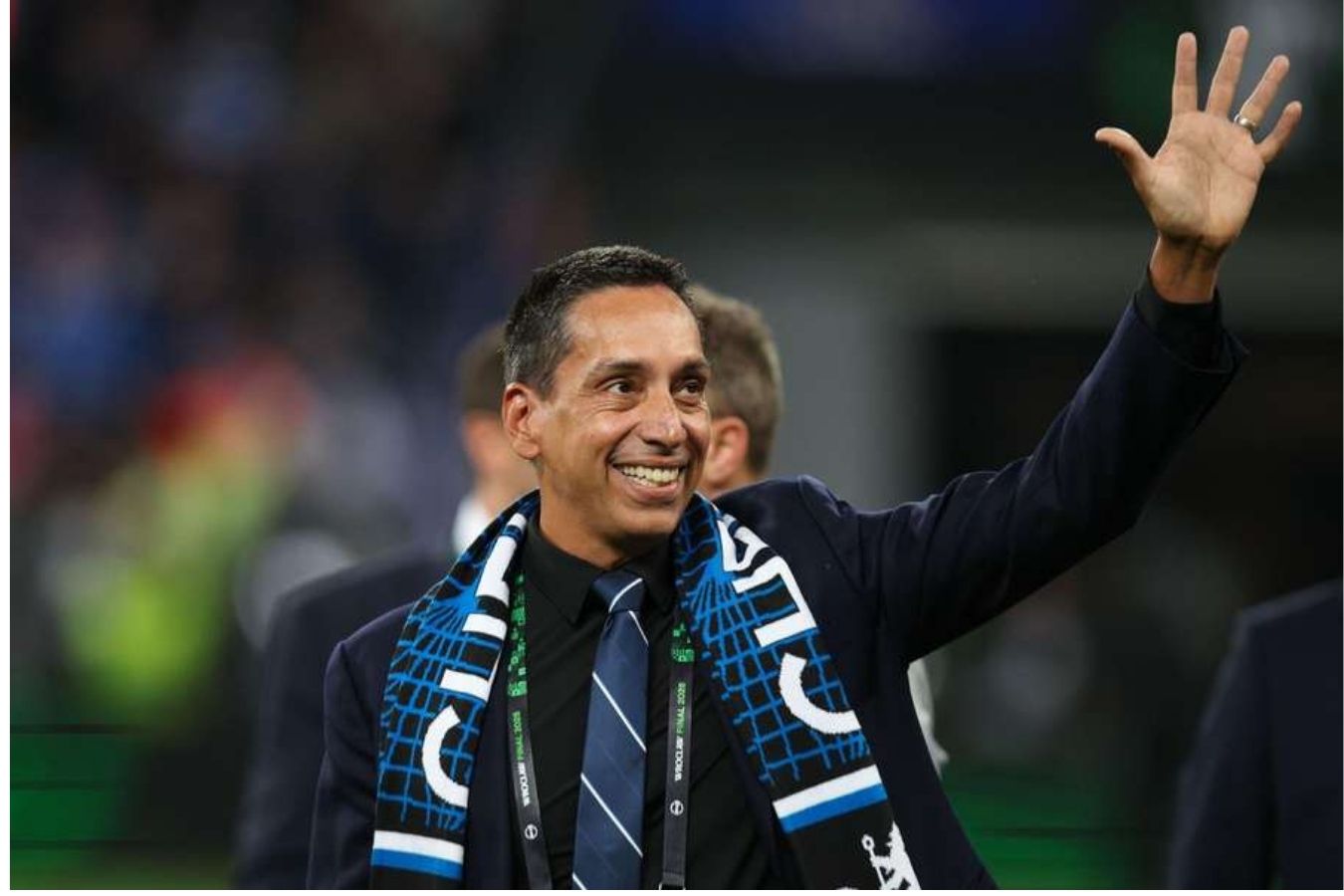
The Bigger Latino Significance
For decades, Latinos have been everywhere in Major League Baseball.
They have been stars on the field, managers in the dugout, coaches in the clubhouse, scouts, executives and fans filling stadiums.
But ownership has been a different story.
Feliciano’s emergence as an MLB control person therefore carries significance far beyond San Diego.
It demonstrates that Latino participation in professional sports is slowly expanding from the playing field into the boardroom.
And this is happening at the very top of the financial food chain.
Feliciano isn’t simply a minority investor in a baseball club.
He is the control person of one of Major League Baseball’s 30 franchises.
That is a very different seat at the table.
A Fortune Built on Learning From Failure
Perhaps the most interesting part of Feliciano’s story is that it wasn’t perfectly straight.
He went from Princeton to Goldman Sachs.
Then Stanford.
Then the dot-com world.
Then failure.
Then private investing.
Then Clearlake.
Then Chelsea.
Then the Padres.
That’s not a straight line.
It’s a series of pivots.
And each pivot appears to have added another tool to his business arsenal.
His failed technology venture taught him about risk.
Investment banking taught him about transactions.
Private equity taught him about building value.
Clearlake gave him the platform to become extraordinarily wealthy.
Sports ownership now gives him something different: a chance to apply all those lessons to organizations with millions of emotionally invested customers.
Those customers just happen to call themselves fans.
Arturo Alfonso Schomburg , The ‘Father of Black History’ Was Afro-Puerto Rican
The $3.9 Billion Question
Of course, buying a baseball team is one thing.
Running it successfully is another.
The Padres have passionate fans, an increasingly valuable franchise and a competitive roster.
But baseball has a funny way of humbling people who think money automatically guarantees October glory.
The Yankees know that.
The Mets know that.
The Dodgers know that.
And the Padres know it too.
Feliciano’s challenge will be to balance financial discipline with baseball ambition.
He has said the goal is to build an organization capable of competing for championships year after year, not simply make one expensive run at a title.
That philosophy sounds remarkably similar to his investment philosophy.
Long-term thinking.
Operational excellence.
Strategic investment.
And patience.
Baseball, however, has one variable that private equity cannot completely control.
The ball.

From Puerto Rico to Petco Park
José E. Feliciano’s journey is ultimately bigger than a $3.9 billion transaction.
It is the story of a Puerto Rican-born businessman who turned education into opportunity, setbacks into lessons and investment expertise into extraordinary wealth.
Now he sits in one of the most exclusive rooms in American sports.
But the significance of the moment isn’t just that a billionaire bought a baseball team.
It is that a man born in Puerto Rico now has a voice in determining the future of a Major League Baseball franchise, while openly carrying his heritage with him.
He arrived at Petco Park wearing Roberto Clemente’s number.
That was perhaps the perfect image.
Clemente showed the world what Puerto Rican excellence could look like on a baseball field.
Feliciano is now showing what Puerto Rican excellence can look like in the ownership suite.
The next chapter will be measured in wins, losses, investments, community impact and, ultimately, whether the Padres can finally deliver the championship San Diego has been waiting for.
For Feliciano, though, the journey itself is already historic.
From Puerto Rico to Princeton.
From Wall Street to private equity.
From a failed dot-com venture to a multibillion-dollar investment empire.
From Chelsea to San Diego.
And now, from the stands to the owner’s box.
Not bad for a kid from Puerto Rico.