

Bad Bunny at the 2026 Super Bowl: A Halftime Show That Changed Culture
When Puerto Rican megastar Bad Bunny, the world’s most-streamed artist, took the stage at Super Bowl LX’s Apple Music Halftime Show on February 8, 2026, he didn’t just perform; he transformed one of the biggest entertainment stages on the planet into a living celebration of Latin culture, identity, and unity. It was 13 minutes that stirred millions, rewrote expectations, and sparked more than a few political fireworks.

A Record Audience, a Historic Performance
Preliminary figures, still being analyzed, suggest Bad Bunny’s set was among the most-watched halftime shows of all time, drawing an estimated ~135 million viewers worldwide, surpassing previous Super Bowl records.
That alone would have made it memorable. But the real milestone was this: Bad Bunny was the first solo artist to perform almost entirely in Spanish at the Super Bowl halftime show, a stage historically dominated by English-language performances and mainstream pop.
Whether you speak Spanish or not, the moment hit hard, and not just for what was on the field, but what it stood for.
Avila Brothers: R&B Producers for Usher, Janet Jackson & More
More Than Music: A Cultural Narrative in Motion
Instead of opening with pyrotechnics alone or abstract visuals, Bad Bunny built a narrative of community and heritage. The show’s staging mimicked Puerto Rican landscapes, sugar cane fields, street vendors, markets, domino games, and even a casita (little house), pulling the audience into a vivid portrait of home and tradition.

He began with crowd-pleasers like “Tití Me Preguntó” and “Yo Perreo Sola,” but layered in symbolic imagery:

- Jíbaros (rural workers) and traditional dancers, grounding the performance in Puerto Rico’s working-class roots.
- A real couple was married on stage during the performance. Bad Bunny served as a witness and signed their marriage certificate.
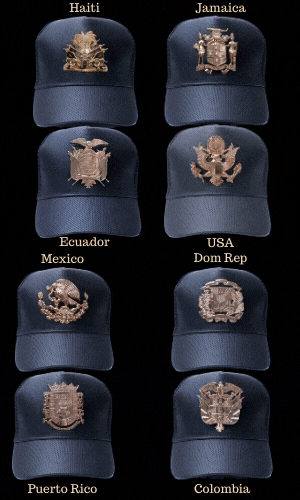
- A parade of flags from across North, Central, and South America, literally and symbolically asking us to rethink America as inclusive of all peoples of the hemisphere.
- The closing message, displayed on the stadium’s jumbotron: “The only thing more powerful than hate is love.”
- The Grammy Hand-Off: Bad Bunny handed a replica Grammy Award to a young boy (child actor Lincoln Fox) to inspire a new generation. Social media users incorrectly speculated the boy was a child recently detained by ICE.
- Toñita’s Cameo: The bar in the show was tended by Maria Antonia Cay (Toñita), the real-life owner of the Caribbean Social Club in Brooklyn, which is a staple of Nuyorican culture.
Bad Bunny’s finale wasn’t a quiet fade-out, it was a declaration of unity, with him holding a football branded “Together, We Are America,” then shouting out countries from Chile to Canada in a heartfelt plea for connection.

Surprise Cameos: Lady Gaga and Ricky Martin Ignite the Crowd
Two big names added extra fireworks to an already dazzling set:
- Lady Gaga appeared mid-show in a stunning baby-blue dress to deliver a salsa-inflected version of “Die With a Smile,” blending her pop power with Latin rhythms.
- Latin pop legend Ricky Martin joined Bad Bunny to sing “Lo Que Le Pasó a Hawaii,” a poignant track about gentrification and displacement that tied directly into the show’s deeper narrative.

These surprise appearances weren’t just star power, they were cultural signifiers, reinforcing that the halftime show was a pan-generational moment for Latinos and a smashing mashup of Latin music’s eras.
Meet Jack Garcia: The Cuban FBI Agent Who Took Down the Mob
Cultural Richness: More Than Entertainment
This was a show layered with meaning:
- Puerto Rican pride wasn’t just backdrop, it was center stage, with flags, imagery, and references to the island’s struggles and joy.
- The staging subtly referenced real issues, like chronic power outages and the resilience of Puerto Rican communities, without turning the show into a protest rally.
- Celebrities like Pedro Pascal, Cardi B, Jessica Alba, Alix Earle, and others weren’t there as empty cameos, they danced, interacted with the scene, and helped paint a community rather than a celebrity spectacle.
It was, in many ways, the most culturally saturated halftime show in history, not despite being Spanish, but because of it.

Political Backlash: A Language Battle in the Culture Wars
Not everyone was thrilled.
Conservative figures, including former President Donald Trump and right-wing commentators, blasted the show for being “too Spanish,” claiming it was “anti-American” or inappropriate for a family audience. Some even called for FCC investigations over allegedly “illegal” content.

Opposition wasn’t just political punditry, critics staged alternative halftime events and grumbled that the NFL had “lost its identity.”
But that backlash only spotlighted what the show was truly doing: forcing mainstream America to confront the reality that Spanish and Latin culture are fundamental parts of U.S. identity. As comedian Jon Stewart quipped, the outrage was less about unity and more about discomfort with inclusion.
For many Latino viewers, especially those long used to being sidelined in big cultural moments, the show wasn’t just entertainment. It was representation on an epic scale, served up in the language of home.
Meet Alex Cohen, the Puerto Rican Wife of NY Mets Owner Steve Cohen
Post-Show Actions
In a move that puzzled many fans, Bad Bunny wiped his entire Instagram account clean within hours of the performance. This led to speculation about whether he was responding to the political backlash or preparing for a new project.
Love, Unity, and a New Normal
Bad Bunny didn’t come to the Super Bowl to blend in. He came to bring his world with him, anguage, heritage, celebration, and love. And in doing so, he reminded millions that identity isn’t a sidebar to American culture, it’s part of its heart.

Whether you loved it or hated it, this halftime show will be analyzed, debated, and remembered as one of the most consequential in Super Bowl history, not just because of what was performed, but because of what it meant.
Latinos watching saw themselves reflected in lights, music, and movement. And for many, that alone was enough to make Super Bowl 60 unforgettable.